Business Industry Capital
|



|
Bulgaria
|
|  | |
|
BNB Exchange Rates
(13.08.2026) |
|---|
| |
GBP |
|
1.17150 |
|
| USD |
|
0.86620 |
| CHF |
|
1.06770 |
| EUR/USD |
|
1.1545* |
|
ECB exchange rate |
|
Basic Interest Rate |
| |
as of 01.12 |
|
1.81% |
|
|
|
|
Financial news |
|
Of all 257 cities in Bulgaria, 41 increased their population last year, seven of which are district centers. This is shown by a comparison of the data of the current demographic statistics of the National Statistical Institute for the population by cities and sex as of December 31, 2025 with those from a year earlier. The district centers that increased their residents are Blagoevgrad, Burgas, Varna, Veliko Tarnovo, Kardzhali, Plovdiv and Sofia. In the remaining 216 cities, people decreased by different numbers, with the exception of Chernomorets in Burgas district, whose number of residents did not change compared to 2024 - 2,163 people. There are 10 towns with a population of less than 1,000 people. Thus, the group of the smallest Bulgarian town, Melnik (181 inhabitants), also includes Antonovo (930 inhabitants), Boboshevo (933 inhabitants), Bolyarovo (982 inhabitants), Brusartsi (838 inhabitants), Gramada (913 inhabitants), Dimovo (895 inhabitants), Klisura (778 inhabitants), Madzharovo (480 inhabitants) and Pliska (756 inhabitants). The largest population increase is in Sofia, the smallest - in Bolyarovo. The population of the capital increased by 7,586 people and now reaches 1,213,134. After Sofia, the population of Plovdiv "jumped" the most - by 4,505 people and is now 333,994, and in Varna the population increased by 3,946 people and becomes 322,683. Blagoevgrad and Nessebar also increased their population with a four-digit number of inhabitants last year, with 1,501 and 1,580 inhabitants, respectively. The cities in which an increase in population is reported in 2025 are located in 15 of the 28 districts, according to the data. Last year, the district with the administrative center of Kardzhali was the only one in which all cities - a total of 5 - increased their population. These are the district center, Ardino, Dzhebel, Krumovgrad and Momchilgrad. More than half of the 20 towns in Burgas region have seen their population grow last year. In addition to the regional center, these include Aheloy, Bulgarovo, Kableshkovo, Kameno, Kiten, Nessebar, Obzor, Pomorie, Primorsko, Sveti Vlas and Sozopol. Last year, Ruse lost the most residents Source: BTA
The growth of imports of goods in Bulgaria outpaced that of exports from the country in the first six months of 2026 on an annual basis, according to preliminary data from the National Statistical Institute (NSI). During the period January - June 2026, exports of goods from Bulgaria to third countries increased by 5.1 percent compared to the same period in 2025 and amounted to 7,961,000 euros. Bulgaria's main trading partners are Turkey, China, Serbia, the United States of America, the United Kingdom, the Republic of North Macedonia and Ukraine, which account for 48.4 percent of exports to third countries, according to preliminary data from the National Statistical Institute (NSI). In June 2026, exports of goods from Bulgaria to third countries increased by 10.1 percent compared to the same month of the previous year and amounted to 1,463,600 euros. During the period January - June 2025, exports of goods from Bulgaria to third countries decreased by 3.6 percent compared to the same period of 2024. In June 2025, exports to third countries increased by 0.9 percent compared to the same month of the previous year. Imports of goods into Bulgaria from third countries during the period January - June 2026 increased by 25.7 percent compared to the same period of 2025 and amounted to 13,480,100 euros (at CIF prices). The largest value volume was the volume of goods imported from Turkey, China, Kazakhstan and Serbia. In June 2026, imports of goods into Bulgaria from third countries increased by 40.4 percent compared to the same month of the previous year and amounted to 2,416,800 euros. Imports of goods into Bulgaria from third countries in the period January - June 2025 marked a growth of 5.5 percent compared to the same period in 2024, and in June 2025 it decreased by 3.1 percent compared to the same month of the previous year, according to a report in the National Statistical Institute. The foreign trade balance (export FOB - import CIF) of Bulgaria with third countries for the period January - June 2026 is negative and amounts to 5,519,100 euros. In June 2026, the foreign trade balance (export FOB - import CIF) with third countries is also negative and amounts to 953.2 million euros. During the period January - June 2026, a total of 22,968,400 euros worth of goods were exported from Bulgaria, which is 8.5 percent more compared to the same period in 2025. In June 2026, total exports of goods amounted to 4,164,800 euros and increased by 13.7 percent compared to the same month of the previous year. During the period, a total of 29,381,200 euros worth of goods were imported into the country (at CIF prices) or 14.4 percent more compared to the same period of 2025. In June 2026, total imports of goods increased by 22.1 percent compared to the same month of the previous year and amounted to 5,175,500 euros. The total foreign trade balance (FOB exports - CIF imports) was negative for the period January - June 2026 and amounted to 6,412,800 euros, and in June 2026 it was also negative and amounted to 1,010,700 euros. Source: BTA
Half of the companies in the woodworking and furniture industry that work for export reported a decline in the last quarter. This is shown by the first results of the "Pulse of the Industry", a new survey by the Chamber of Woodworking and Furniture Industries (BKDMP) among companies in the sector. In the anonymous survey, of the participating companies — 42.5% are small enterprises, microenterprises — 27.5%, medium-sized enterprises — 22.5%, large enterprises — about 5%, and the rest did not define themselves. About 66.7% of the respondents (43.6% indicated "slightly lower" and 23.1% - "significantly lower") reported a decline in production or in the amount of services, materials or accessories provided in the last quarter compared to the previous one. Only 33.3% reported growth (25.6% responded with "slightly higher", and 7.7% - "significantly higher"). Almost half of the companies (47.5%) export products, goods, materials or services, while 52.5% work exclusively for the Bulgarian market. Among the companies that actually export, the picture is as follows: 35% do not note any change in exports, 30% report a decline (“slightly lower”), 25% — a significant decline, and only 10% report a slight increase. No one reports a significant increase in exports. That is, more than half of the exporters (55%) observe a deterioration compared to the previous quarter. Regarding expectations for the number of employees in the next quarter, half of the companies (50%) do not plan any change. Nearly 17.5% plan to hire new employees, and the same number (17.5%) indicate that they are unable to find qualified personnel — a signal of a structural shortage of personnel in the industry. 15% expect to lay off employees. Despite the difficult market environment, investment activity remains relatively stable: 70% of companies plan investments in the next 6 months — 27.5% significant and 42.5% small and ongoing. Nearly 22.5% do not plan investments, and 7.5% are unclear. The sector is shrinking. The majority of companies (2 out of 3) reported a decline in production in the last quarter, not growth — a clear sign of weakening demand, both on the domestic and foreign markets. Exports are under pressure. Over half of exporting companies report a decline in their exports, and none report significant growth — a worrying signal about the preservation of the competitiveness of the industry on international markets. The labor market is unpredictable. According to the survey, there are both companies that are laying off workers and those that cannot find staff — the shortage of qualified personnel remains a structural problem, despite the cyclical slowdown. Investments do not stop, but they are becoming more cautious. Companies in the sector say they are planning "small and ongoing" investments, rather than large-scale ones. In practice, this means that businesses are maintaining activity, but are waiting for a more stable economic and political environment and predictability before making larger commitments. Source: Darik radio
|
Companies |
|
The largest peach processing plant in Bulgaria, Fructo Sliven, processes about 220 tons of peaches per day. After 3 bad years, the Sliven region expects to produce about 9,000 tons of canned peaches, considering that the region produces 90% of the country's canned peaches, says the chairman of the industry chamber, Tsvetan Tsekov. In the Sliven region, about 300 farmers grow peaches. Fructo Sliven has over 60 years of experience in the production of canned fruits and vegetables. The production base is located in Sliven and occupies 70 thousand square meters, of which 20 thousand square meters is covered. The company's orchards, where the main raw material - peaches and cherries - is grown, are also located near the factory. Fructo Sliven also produces fruit purees and canned vegetables. Its sales office is in Varna. Over 95% of the production is sold abroad. Last year there was a huge drop in production due to the lack of fruit and we were working at 40% of our capacity. Now the company is trying to reach 100% of its capacity. The company exports its products throughout Europe, and in recent years it has also covered the markets in Australia and Canada, where it sells over 50-60 containers of peach compotes. About 240 people work at "Fructo Sliven" on average per year, and in the summer their number reaches 500 people in total. The company is planning new projects - purchasing modern machines for about 650,000 euros, and is also developing 2 new projects for solar panels and batteries. divident.eu The Strazhitsa wind farm near Balchik with a total investment value of around EUR 100 million will be implemented by Tessa Green Energy. The project is the first large-scale wind farm in Bulgaria to reach financing in more than 12 years. The last comparable wind project to reach financing in Bulgaria was implemented in 2012, making Strazhitsa the first of its kind in over twelve years. The first phase of the project envisages 70 MW of installed capacity and 11 Vestas EnVentus V162-6.4 MW wind turbines. The park is expected to be put into commercial operation in the fourth quarter of 2027. The project will be implemented with long-term financing of EUR 78 million, structured and finalized by Postbank. Strazhitsa is the result of years of preparation and is the first step in a broader strategy by Tessa Green Energy to develop renewable energy in the region. Source: Darik radio
The construction of a new park in Plovdiv has started - "Kan Krum", which covers an area of 79 decares and is financed by the European Regional Development Program 2021-2027. The cost of the construction is 4.53 million euros, with 97% of the financing being free of charge. The construction itself will be carried out by the company "IDL". Construction supervision is in the person of "Infra Invest", and author's supervision is "Art Plan". The new park will extend between "Tsar Simeon" Blvd., "Saedinenie" St. and "Alexander Terziev" St. The project envisages a modern park environment with an amphitheater with 194 seats, an open stage, a service building and a separate public toilet. Three water areas with a total volume of over 1400 cubic meters, a decorative fountain and an automated irrigation system with borehole wells are planned. The park will also have three parking lots with 109 spaces, including for people with disabilities. The landscaping will occupy over 65% of the territory - with 51 acres of lawns, over 20,000 shrubs and nearly 900 trees. plovdivnow.bg The international platform for food and other goods delivery Just Eat Takeaway.com announced that it is entering the Bulgarian market. This comes 4 years after its exit from neighboring Romania and 8 years after it entered our country through the acquisition of BGMenu. Deliveries will be resumed on September 15. The company states that it will follow "the procedures provided for in the law regarding the approximately 220 affected employees and 480 couriers." Founded in 2017, "Brabion" is a Bulgarian company that produces traditional Armenian lavash under the "Dina" brand. Behind the business is Gevorg Khachatryan - a financier with international experience, who left the corporate world to create a product that was almost absent on the Bulgarian market at the time. Today, the company produces about 50 tons of lavash per month, has a modern production facility in Voivodinovo near Plovdiv, has a turnover of about 3 million leva in the last year and is already exporting to a number of European countries. The production facility employs 30 people. Lavash is a traditional thin, soft and unleavened flat bread, which is made from only three ingredients - flour, water and salt. It is widely distributed in Armenia, Iran, Azerbaijan and Turkey. Its history dates back thousands of years, with archaeological finds indicating that such bread was made as early as the 3rd millennium BC. The word "lavash" itself means "well-stretched", and in 2014 the tradition of its preparation and its cultural significance were included in the UNESCO List of Intangible Cultural Heritage. To this day, at Armenian weddings, there is a custom of placing lavash on the shoulders of the newlyweds as a symbol of fertility, luck and prosperity. In 2018, the company invested in a new production base in the Plovdiv village of Voivodino. The main market remains Bulgaria, but the company is already successfully exporting to Greece, Germany and France. Source: mediapool.bg
A new retail park will be built opposite the "Vasil Aprilov" Primary School in Ruse on Lipnik Blvd. and will be powered by photovoltaics on the roof. The investment proposal is from the end of 2024, and the investor is the Plovdiv-based "Lipnik 123A" EOOD. It is owned by "Keramik Group", which created the "Alati" construction hypermarkets. In Ruse, the construction of three main buildings is planned, which will also have a parking lot. In one building, a showroom and warehouse for products from the client's activities will be set up - mainly trade in bathroom products. The premises in the other two buildings will be rented out for the location of stores of global and Bulgarian brands of clothing, sporting goods, electrical appliances, household goods, etc. The parking lot around the main buildings will be only for temporary parking of cars of employees and clients of the complex during working hours. Ruse Media The modern electric bicycle manufacturing plant near Kuklen, owned by the bankrupt E-velorex EOOD, was again not sold. A secret auction was scheduled for July 30 with a starting sale price of 21,780,000 euros. The next auction for the E-velorex EOOD factory will be in September, and the price will certainly be reduced after a new appraisal of the property. E-velorex EOOD is a subsidiary of the long-standing Plovdiv bicycle manufacturer Leader 96. Its high-tech e-bike factory covers 25,000 sq m. of a total area of 46,999 sq m. It was opened in 2023 with the great ambition of the partners to build on their positions in international markets. Their bicycles are ridden in Italy, Belgium, Germany, Sweden, the Netherlands, etc. A large-scale investment was made in the new factory, 50 million leva were invested in construction and equipment. At that time, the state allocated 1.5 million leva free of charge for the construction of road infrastructure, and the Ministry of Innovation and Growth issued a class A certificate for the investment. 330 people were supposed to work there, and the plan was to produce 300 thousand e-bikes per year - models for urban environments (City and Trekking), mountain bikes (MTB) and folding bikes. Mostly, indebtedness to creditors, suppliers and the National Tax Agency, as well as stagnation in the European market as a whole in the bicycle sector, is pulling the company towards the swamp. And although business around the world has suffered due to Covid, the Plovdiv company began to face financial blows long before the pandemic. From the financial report for 2017 of "Leader Group 2016" AD /parent company in the Leader 96 group/, it is evident that for the same year, after taxes, the net loss amounted to over 1.6 million BGN, and the previous year was larger – over 2.8 million BGN. The bankruptcy proceedings were requested by the partners and the creditors. The procedure started in February 2026 with a decision of the District Court - Plovdiv, and since June 1 it has been officially bankrupt. Otherwise, the claim for insolvency and over-indebtedness is from March 2024. With another decision, the District Court of Plovdiv deprives the debtor of the right to manage and dispose of the property included in the bankruptcy estate. A general seizure and attachment of the property has also been established. "Lider 96" was registered in Plovdiv in 1996 and initially traded bicycles, then began production and gradually became one of the leading European manufacturers of bicycles and electric bicycles. It also attracts foreign partners. Its founders are the Georgi Zlatanov family and Irina Zlatanova, as well as Petar Kurshumov. Later, the Zlatanovs' son - Dimitar - took over. The family also has a dairy business. Before setting up their production facilities in Rogosh, and then in Kuklen, the partners' first steps were at 3 Mostova Street - the beginning of the Gerdzhika bridge /left/ in the direction of the "Karshiyaka" district. The enterprise from the time of the "Progress" company was located there, in which various parts for mechanical engineering were produced before privatization. Currently, "Kurshumov" AD is building a residential building on the same site. The majority owner of the company is Petar Kurshumov's son - Yanko. Over the years, "Leader 96" has gone through various corporate transformations, married and divorced a number of foreign partners. Currently, the parent company "Leader Group 2016" is under the umbrella of "TRG EEF Legend Bulgaria" AD, owned by the American Nicholas S. Rohatton. Source: Marica
Electrocharge is expanding its electric vehicle charging network with a new fast charging station at the Petrol Kulata gas station, located in close proximity to the border crossing with Greece. The new station provides a convenient charging option on one of the busiest international routes and facilitates electric vehicle travel both in Bulgaria and to Greece. On the route to Kulata, drivers can also use the Electrocharge fast charging station in Simitli. Both locations provide additional flexibility when planning their trip and are particularly convenient for electric vehicles with lower mileage. Electrohold will start building its network of Electrocharge electric vehicle charging stations at the end of 2024. "Gerbera City Home" is the newest residential complex, an investment of the construction entrepreneur Georgi Chalamov. The owner of the company "Gerbera" has undertaken large-scale construction in a terrain located next to the former aircraft repair plant "Avionams" in the South-Eastern Industrial Zone of Plovdiv. The plot is about 40 acres and is located on the corner between Asenovgradsko Shosse and Tsar Simeon Blvd. A multifunctional complex of housing and public areas will appear on it. With the new 40 acres, the owner of "Gerbera" is submitting an application for one of the largest construction projects in the southern territories of Plovdiv, near Asenovgradsko Shosse and the industrial zone "Trakia". The Gerbera City Home residential complex is already under construction at 2 Tsar Simeon Street. The complex has 20 residential buildings with a modern facade, parking spaces and garages are provided for all apartments, as well as shops on the ground floor for the convenience of the residents of the complex. In addition to Gerbera City Home, the entrepreneur is behind several other projects in key locations in the city on the hills - his is the Gerbera complex on the Kolodrum, with about 400 apartments. Chalamov is also building new apartments in properties he bought from the territory of the Optela factory. Source: Marica
"Real Estate Fund Bulgaria" REIT (RFB) plans to distribute a dividend of EUR 7.81 million from undistributed profits from previous years, which is equivalent to a gross dividend of EUR 0.225 per share. The decision is to be voted on at an extraordinary general meeting of shareholders, convened on October 5, 2026. Source: investor.bg
|
|
Investments
|
| |
|
|
 |
 Kameno, Burgas region Kameno, Burgas region
Area: 12.9 decares
Built-up area: 1,485 m2
4 metal silos with a total capacity of 21,200 m3;
Main equipment: • laboratory • scales • service building • 2 unloading stations |
 |
Operating enterprise with excellent financial results, 14.6 decares total area with excellent location, 3 halls (total area 1600 sq.m and height 11 m), cranes for loading and unloading activities (lifting capacity 13 t), admin. building (360 sq.m), warehouses and active store
|
 |
Samokov, Sofia region
The property is suitable for warehouse, production, logistics, or commercial activities and offers excellent conditions for business development or investment. The facility includes storage halls, sheds, and an administrative building. Electricity, water, and sewage are provided. The property is fenced, with a spacious yard and convenient access for heavy trucks. The large plot area allows for additional construction and development of various activities.
|
 |
Municipalities: Chirpan, Bratya Daskalovi, Brezovo, Panagyurishte, and Parvomay
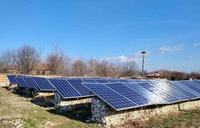
Total area: about 40 decares of owned land in the regions of Plovdiv and Stara Zagora, 29 installed PV plants, each with a capacity of 29,700 Wp, 3 additional properties with development potential
|
 |
Sofia Center
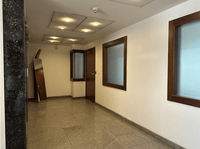
500 sq.m, functionally distributed between open space area, private offices, meeting room, server room, and restroom
|
|
|
Bulgarian Industrial Association
|
| |
|
World
|
| |
|
Europe |
|
New rules under the Packaging and Packaging Waste Regulation are starting to apply in the European Union. The regulation introduces strict restrictions on the food contact of perfluoroalkyl and polyfluoroalkyl substances (PFAS), known as “forever chemicals”, in packaging. For example, for packaging manufacturers, definitions will now be harmonised across the EU. Some markings and information will now also be required for packaging, ensuring that packaging manufacturers or importers can be identified and contacted if necessary, the Commission explains. Additional rules under the regulation are planned to be introduced gradually, with most of the obligations starting to apply from 2030, including rules on recyclability, reuse targets or very small single-use plastic packaging used in hotels and restaurants. On average, every European throws away half a kilogram of packaging every day - from coffee cups to beverage capsules, plastic wrap and foil or from online shopping bags. In this regard, the EC points out that the regulation will help to further address the environmental challenges caused by packaging and will reduce Europe's dependence on imported fossil fuels, from which plastic packaging is almost entirely produced. Household waste in Bulgaria is recycled at a level of just under 17 percent, compared to an average of about 48 percent in the EU, announced the Minister of Environment and Water Rositsa Karamfilova in June during the National Meeting of Local and Central Executive Authorities in Sofia, organized by the National Association of Municipalities in the Republic of Bulgaria (NAMB). In her words, regarding the introduction of a deposit system for beverage packaging, the Minister stated that neither state nor private monopoly will be allowed. Source: BTA
|
America |
|
Core U.S. inflation moderated in July, likely easing pressure on the Federal Reserve to raise interest rates, Bloomberg reported. The consumer price index (CPI), which excludes the often volatile food and energy categories, rose 0.2% from the previous month, according to data from the Bureau of Labor Statistics released on Wednesday. On an annual basis, it rose 2.5%, the slowest pace since March 2021. Overall, consumer prices rose 0.1% from the previous month and 3.4% from the same period last year. The impact of the energy price shock caused by the Iran war continued to fade in July. The data could give the Fed more room to assess inflationary pressures amid a recent slowdown in hiring as it considers whether to raise interest rates at its meeting on Sept. 15-16. Policymakers will review additional employment and inflation reports ahead of the September meeting, and investors will be closely watching Fed Chairman Kevin Warsh’s expected remarks. U.S. stock futures rose and Treasury yields fell as investors trimmed bets on a September rate hike. Commodity prices, excluding food and energy, rebounded after two months of declines. Services prices, excluding energy and rent, rose 0.2%, according to data compiled by Bloomberg. Home prices rose 0.1%, accounting for two-thirds of the overall increase, according to the Bureau of Labor Statistics. Medical care and airfares are among the other service categories that have seen price increases. Energy and gasoline prices fell for a second straight month, while grocery prices fell for the first time since March, thanks in part to a record drop in lettuce prices amid a cyclospora outbreak. U.S. gasoline prices topped $4 a gallon again in July after a U.S.-Iran truce collapsed and hostilities resumed, but overall they remained lower throughout the month than in June. Source: investor.bg
|
Asia |
|
The Middle East war has caused the biggest oil supply shock in history, but even at the height of the conflict, prices have not reached the $150 per barrel analysts had predicted. The reason lies less in the Persian Gulf than in Beijing. China has been gradually becoming a giant factor in the behavior of the oil market since last year as the largest importer on a global scale. But now it is working even better because of a combination of "tremors" in the previous model - an unprecedented blockage of the Strait of Hormuz, through which 14 million barrels pass per day, and discord in OPEC. Other governments have undoubtedly contributed to this. Saudi Arabia and the United Arab Emirates have released an additional 5 million barrels per day through pipelines that bypass the strait. Washington and Tokyo have released a record 2 million barrels per day from their strategic reserves, and poorer countries have curbed their consumption. But these measures would not have been enough without the quiet decisions taken in Beijing. Between February and June, China halved its crude oil imports by 5.5 million barrels per day, which experts say has knocked $30 or more off Brent crude. That’s more than half the global demand drop during the COVID-19 lockdowns, but unlike the pandemic, China’s economy has continued to grow normally. “China is the new OPEC,” a top oil trader recently told The Economist — the country’s ability to turn oil demand on and off gives it a price clout comparable to that of the Organization of the Petroleum Exporting Countries (OPEC). And while OPEC has weakened since the recent withdrawal of the UAE, China’s market power has grown. Beijing is using three main tools. First and foremost are national reserves. In the year to early 2026, China bought 200 million barrels at low prices, adding to its already huge reserves of 1.4 billion barrels - purchases that traders estimate have added $10-20 to the world price before the war. They were made possible after a grand national program to expand 11 oil storage facilities with a total of 169 million barrels of additional capacity in 2025-2026. They were filled with force in the weeks before the expected US and Israeli strikes on Iran. After the conflict began, China began to drain its reserves - by 70 million barrels by July, according to Vortexa data, and if floating storage facilities are included, the withdrawal reaches 150 million barrels in three months, or about 1.5 million barrels per day. Beijing quickly reoriented its supplies as well - with sharply increased imports from Russia, a record - from Brazil and new contracts with suppliers in Africa and South America. Domestic production also jumped to 4.32 million barrels per day after a seven-year campaign. The second lever is export restrictions. In March, the government ordered refiners to halt new export contracts and cancel some of those already signed. Between February and April, refined product exports fell by almost half, to 430,000 barrels per day, saving refiners 1.2-1.8 million barrels per day of crude oil. The third lever is shrinking domestic demand. In June, Chinese refineries processed 2.7 million barrels per day less oil than a year earlier - gasoline production fell by 14%, and diesel and jet fuel - by 21% each. More and more city dwellers are switching from cars to subways, bicycles and electric taxis, and domestic flights are declining in favor of trains. The overall impact on China's economy seems to be contained for now. GDP grew by 4.3% in the second quarter, the slowest pace since late 2022, but the reason is more due to weak investment and the property crisis than a lack of oil. But China’s reserves are not infinite. Unlike OPEC, which can theoretically maintain cuts for years, China cannot indefinitely import 5.5 million fewer barrels a day. The war has shown, however, that the country alone can stabilize the global oil market for months - something that the leaders of the increasingly divided OPEC can only dream of. 
|
|
Indexes of Stock Exchanges
12.08.2026 |
| Dow Jones Industrial |
| 53 759.50 |
(-8.50) |
| Nasdaq Composite |
| 26 588.50 |
(143.00) |
Commodity exchanges
12.08.2026 |
|---|
| |
Commodity |
Price |
|
| Light crude ($US/bbl.) | 83.13 |
| Heating oil ($US/gal.) | 4.2238 |
| Natural gas ($US/mmbtu) | 2.8320 |
| Unleaded gas ($US/gal.) | 3.0238 |
| Gold ($US/Troy Oz.) | 4 394.67 |
| Silver ($US/Troy Oz.) | 65.14 |
| Platinum ($US/Troy Oz.) | 1 742.60 |
| Hogs (cents/lb.) | 81.87 |
| Live cattle (cents/lb.) | 22 408.00 |
|
|
|
Nedelya Petkova (1826 - 1894) |
|

Nedelya Petkova (1826 - 1894) was a Bulgarian education pioneer. In 1859 she began teaching girls and developed this into a school system for girls across the Bulgarian part of the Ottoman Empire, with hundreds of girls attending classes.She was born on August 13, 1826 in the town of Sopot. Nedelya Petkova, was also known as Baba Nedelya (Grandma Nedelya). She studied in the monastery school of the “Holy presentation of the Blessed Virgin” convent in the town of Sopot. Later she was self-educated. Nedelya Petkova began as a teacher in Sofia, Samokov, Kyustendil, Prilep, Ohrid, and Veles. She later founded the first Bulgarian girls’ schools in Prilep, Bitolya, Veles, and Thessaloniki. After the Liberation, she lived in Kyustendil (1878) and Sofia(1979). In 1883 she settled in Rakitovo. Government officials tried to stop her and she was arrested and her home searched for seditious books. Although put on trial she was released through lack of evidence and continued her campaign to educate women until her death on January 1, 1894.
|
Archive
Business Industry Capital |
|


 Български



