Business Industry Capital
|



|
Bulgaria
|
|  | |
|
BNB Exchange Rates
(01.07.2026) |
|---|
| |
GBP |
|
1.16040 |
|
| USD |
|
0.87770 |
| CHF |
|
1.08410 |
| EUR/USD |
|
1.1394* |
|
ECB exchange rate |
|
Basic Interest Rate |
| |
as of 01.12 |
|
1.81% |
|
|
|
|
Financial news |
|
Annual inflation in Bulgaria is expected to slow to 5.6% in June from a nearly 3-year high of 6.9% reached in May, according to the National Statistical Institute's express preliminary estimates. Compared to May, consumer prices are down 0.8 percent - the first monthly decrease since September 2025. The largest price decreases compared to May are expected in the following sectors: "Transport" (down 2.5%), "Food and non-alcoholic beverages" (-1.8%), "Clothing and footwear" (-1.1%) and "Entertainment, sports and culture" (-1.0%), while price increases are expected in the groups: "Restaurant and hotel services" (up 1.5%), "Educational services" (up 0.5%), "Personal care, social protection and miscellaneous goods and services" (up 0.2%) and "Healthcare" (up 0.2%). Compared to a year earlier, inflation in the "Transport" sector is expected to slow to 17.8% from 21.6% in May, in "Food and non-alcoholic beverages" - to 2.5% from 4.4%, in "Alcoholic beverages, tobacco products" - to 6.7% from 7.7% and in the prices of utilities (water, electricity, gas and other fuels) - to 5.0% from 5.2%. In June 2026, the small basket price index is expected to decrease by 1.1% on a monthly basis, and to increase by 2.7% on an annual basis. The prices of goods and services from the small basket for the lowest-income 20 percent of households are expected to decrease for food goods by as much as 2.4 percent, while for non-food goods they will increase by 0.4 percent and for services - by 0.1 percent. Source: Duma
The gross external debt of the General Government sector at the end of April 2026 increased by 31.9% (by EUR 3.9722 billion) compared to the same month in 2025 and reached EUR 16.4312 billion. It has the most significant share in the structure of external debt - 24.6% at the end of April 2026, compared to 25.2% at April 2025, according to data from the Bulgarian National Bank (BNB). At the end of April 2026, Bulgaria's gross external debt (private and public) amounted to EUR 66.7183 billion (54.1% of GDP), increasing by EUR 17.2072 billion (an increase of 34.8%) compared to the same period a year earlier, when gross external debt amounted to EUR 49.5111 billion (42.7% of GDP). Long-term liabilities at the end of April amounted to EUR 47.4669 billion (38.5% of GDP and 71.1% of gross external debt), increasing by EUR 6.8244 billion (an increase of 16.8%) compared to April 2025. Bulgaria's short-term liabilities amounted to EUR 19.2514 billion (15.6% of GDP and 28.9% of gross external debt) at the end of the fourth month of this year, increasing by EUR 10.3828 billion (by as much as 117.1%) compared to April 2025, when short-term liabilities amounted to EUR 8.8686 billion. In April 2026, the Central Bank's external liabilities amounted to EUR 11.2272 billion, increasing by EUR 9.3347 billion compared to a year earlier, reflecting liabilities related to the distribution of euro banknotes within the Eurosystem after the country's accession to the euro area on 1 January 2026. The external liabilities of banks and money market funds in our country, known as "other monetary and financial institutions", amounted to EUR 10.1215 billion (8.2% of GDP), increasing by EUR 2.495 billion (32.7%) compared to April 2025. Intra-corporate lending amounted to EUR 14.4011 billion (11.7% of GDP) at the end of April 2026, which is EUR 583.3 million (4.2%) more compared to a year earlier. Source: BNR
Bulgarians paid nearly 2.9 billion leva for internet and television in 2025, according to the data from the annual report of the Communications Regulatory Commission (CRC), which outlines one of the fastest growing parts of consumer spending in the country. Revenue from internet services alone reached 2.376 billion leva, which is an increase of 9.1% in one year. The pay-TV market adds another 499 million leva in revenue. The total amount reaches 2.875 billion leva, or an average of nearly 7.9 million leva per day. If a decade ago the main part of telecommunications spending was related to telephone calls, today the largest revenues come from internet access. By the end of 2025, internet service subscribers in the country were already over 11.2 million, with their number increasing by 13% in a year. Part of the growth is due to bundled services that combine mobile internet, home internet, television and mobile telephony into one monthly bill. The strongest growth remains in mobile internet. Revenue from this service increased by 10.3% in 2025, while revenue from fixed internet grew by 6.2%. More and more users are using mobile devices to watch video, work and access digital content. In parallel, the television market is undergoing a serious transformation. For the first time in ten years, revenue from pay TV has declined. In 2025, they decreased by 1.4% to 499 million leva. However, almost 1.94 million subscribers continue to use paid TV services. The big winner in the sector is IPTV television, which is delivered over the internet. It already forms over half of all television subscribers in the country and brings in over 253 million leva in revenue annually. In just one year, the number of its users has grown by 5.6%. On the other hand, cable and satellite television continue to lose ground. According to the Bulgarian Broadcasting Commission, more and more consumers are switching to internet-based platforms and video-on-demand services. Among the reasons are the development of optical networks, better quality of internet connections and the introduction of new ways of watching content via smart TVs and mobile devices. Source: 24 chasa
The overall producer price index in industry in May 2026 was 17.5 percent above the level of May 2025. Price growth was registered in the extractive industry - by 61.9 percent, in the production and distribution of electricity, heat and gas - by 21.5 percent, as well as in the manufacturing industry - by 8.9 percent. In April 2026, producer prices in industry increased by 15.2 percent above the level of April 2025 and by 1.9 percent compared to the previous month. In May, on an annual basis, higher prices in the manufacturing industry were observed in: the production of basic metals - by 21.5 percent, the production of chemical products - by 14.8 percent, the production of cars, trailers and semi-trailers - by 11 percent. A decrease in prices was recorded in: the production of machinery and equipment, general and special purpose - by 1.4 percent, the production of computer equipment, electronic and optical products - by 0.6 percent, the production of vehicles, excluding automobiles - by 0.2 percent. The overall producer price index in industry decreased by 0.2 percent in May 2026 compared to the previous month. Lower prices were observed in the production and distribution of electricity, heat and gas - by 1 percent, and an increase was registered in the extractive industry - by 1.1 percent, and in the processing industry - by 0.1 percent. The year began with a growth in producer prices in industry of 5.9 percent on a monthly basis and 11.3 percent on an annual basis. Source: NSI
|
Companies |
|
The company "Litasco", which owns the assets of "Lukoil" in Bulgaria, has reached an agreement with the Bulgarian government to unblock the loans granted in 2023 to "Lukoil Neftochim Burgas" in Geneva, which is why restrictions were imposed in Switzerland on the Burgas refinery to purchase crude oil from companies registered in Switzerland. The goal of "Litasco" is to preserve its economic interests and assets in Bulgaria, but also to maintain the stability of the economy in the country. The special commercial manager at "Lukoil" Evgeni Simeonov explained that in the past months, due to uncertainty in supplies, processing of heavy types of oil was allowed, which led to the accumulation of serious problems in the installations and hindering the work at the plant. Source: actualno.com
German technology giant Bosch will shut down its engineering center in Sofia from mid-2027. The decision is part of a broader consolidation of the company's engineering operations amid serious challenges facing the global automotive industry. The change will affect around 670 employees in Bulgaria. Around 400 jobs will be cut in 2026, while the remaining positions are expected to be optimized by mid-2027. The reason for the decision is the pressure on the automotive sector, related to declining production volumes, changing customer requirements, the slowdown in electric mobility and automated driving, as well as the shift in demand to markets outside Europe. The company also reports high costs and increased competition in the industry. "The automotive industry is experiencing one of the most significant transformations in its history," said Dan Lazarescu, CEO of Robert Bosch EOOD and representative of the Bosch Group in Bulgaria. The company will continue its activities in our country through the sales, customer service and training areas in the field of automotive equipment, power tools, Home Comfort and building technologies, as well as through BSH Household Appliances Bulgaria and Bosch Digital. The Bosch Group has been present in Bulgaria for more than 30 years. By the end of 2025, the company had over 1,000 employees in our country, including in unconsolidated companies. In 2025, Bosch realized a turnover of 196 million euros, or 383 million leva, in Bulgaria. Swiss venture capital fund Constructor Capital, which has a resource of 92.8 million euros, will look for companies in deep technology in Bulgaria to invest in. The fund focuses on projects between the seed and series A stages, and traditionally invests between 1 and 10 million euros. Constructor Capital is the investment division of Constructor Group, which unites the private university in Germany Constructor University, research laboratories and a technology platform for education and science. The group already operates in Sofia through Constructor Tech ("Constructor Tech Bulgaria"), which has 76 employees as of April 2026 and an office in the NV Tower building on G. M. Dimitrov Blvd. The fund now also has its own representative on site, Claudio Meireles, Marketing Director of Constructor Capital. The same building also houses the office of the software company Acronis, which employs about 500 people. Key figures in Constructor Capital are the co-founders of Acronis, Serge Bell and Stanislav Protasov. The Constructor Start program is an eight-week online initiative by Constructor University for early-stage companies in the artificial intelligence, deep technology and educational technology sectors, which does not take a stake in them, but gives them access to mentorship, the university's research base and up to $ 1 million in financing from Constructor Capital, including an initial investment of $ 100 thousand after presentations at a demo day at the end. The fund's plan for Bulgaria is to support at least three local companies in the coming years. As a rule, Constructor Capital invests in deep technology, software and educational technology and defines its approach as "science first". The fund has a network of over 50 universities, including MIT, Harvard, Oxford, Cambridge and ETH Zurich, which help it assess whether and how to invest in companies with complex scientific products. In addition to Europe, it invests in the US, UAE and Singapore. The fund’s latest deal comes from earlier this week, when it led a €3.5 million round in Austria-based Ora Computing. Ora develops software that shrinks artificial intelligence models by up to 80%, allowing companies to run more AI with less hardware. Running a model already costs tens of millions of euros a month in computing power, and for devices like cars or industrial equipment, the models are often too large. Slovenian energy company GEN-I Group announced that it has successfully completed the acquisition of three large battery energy storage systems (BESS) in Bulgaria. With the finalization of the deal this month, our total portfolio of battery storage systems has reached 42 MW / 100 MWh,” the company said in an official statement. The newly acquired systems are “Belovo”, “Momchilgrad” and “Parvomay 1”, located in Southern Bulgaria. They have a total capacity of 30 MW and a capacity of 76 MWh. The deal was implemented through GEN-I Invest – the group’s subsidiary, which is responsible for the development and management of new energy projects and investments in sustainable solutions. GEN-I already has a history on the Bulgarian energy market. Earlier this year, the company negotiated the purchase of Green Energy Storage from Synergon Holding for EUR 6.6 million, while at the same time requesting permission from the Competition Commission to fully acquire the local companies Vanko-K-2008 and F Energy Solutions. GEN-I Group has strengthened its international investment activity in 2022 and 2024 with the construction of large photovoltaic plants in North Macedonia with a total capacity of 29 MW. Source: economic.bg
The newly built supply and internal technical infrastructure of the Balkan Industrial Park in Lovech was official. The investment is by Balkan AD and was implemented under the project "Development of the Balkan Industrial Park - the city of Lovech for attracting investments", financed under the National Recovery and Sustainability Plan through the Program for Public Support for the Development of Industrial Areas, Parks and Similar Territories and for attracting investments. The total value of the investment exceeds 14 million euros. Balkan Industrial Park is located in the Northern Industrial Zone of Lovech and covers an area of 1305 decares. The owner and operator of the park is Balkan AD, which holds a license for the distribution of electricity in a closed electricity distribution network, issued by the Energy and Water Regulatory Commission for a period of 35 years. Within the framework of the project, a new technical infrastructure has been built, including water supply, storm and domestic sewage, internal gas pipeline, electricity distribution network, landscaping and internal road infrastructure with roundabouts, parking spaces and street lighting. Charging stations for electric vehicles with a maximum power of 480 kilowatts have also been built on the territory of the park, which allow the simultaneous charging of 14 cars. Two new access roads and a water supply system have also been implemented under the project in partnership with the Municipality of Lovech, which did not participate with a financial contribution. Outside the project, Balkan AD has financed with its own funds the reconstruction of an existing access road and the automation of the railway crossing to it. Source: BTA
The residents of the village of Bistritsa and the Pancharevo region will soon have a new modern store at their disposal. The retail chain "Fantastico" has started the construction of a large-scale supermarket, for which the company will invest nearly 9 million euros. The facility will cover over 3,500 sq. m. of built-up area and will offer a diverse range of products, a bakery with bread baked on site, a culinary stand with freshly prepared food, a stand with organic and specialized foods and drinks, a cafe, etc. The "Fantastico" supermarket in Bistritsa will have top-class equipment, parking, charging stations for electric vehicles, an outdoor cafe area, rich landscaping and recreation areas. The project contractor is "Engineering Systems", the designer is "Composition", and the construction supervision is entrusted to the "S Consult" team. From July 1, 2026, a key change will occur for the crypto-asset market across the European Union. This date marks the end of the transitional period established by the Markets in Crypto-Assets Regulation (MiCA), which allowed registered companies to provide services without a full license. All providers will now need to hold one in order to operate legally in the EU. The Financial Supervision Commission (FSC) in Bulgaria has already taken the necessary steps and licensed the first companies under the new requirements. Currently, two companies have received a license from the FSC to provide crypto-asset services. These are: 1. Alaric Securities OOD, with licensed services: Custody and administration of crypto-assets on behalf of clients; Exchange of crypto-assets for funds; Exchange of crypto-assets for other crypto-assets; Execution of crypto-asset orders on behalf of clients; Placement of crypto-assets; Reception and transmission of orders related to crypto-assets; Providing advice and managing a portfolio of crypto assets. 2. “Bilar” Ltd., with licensed services: Custody and administration of crypto assets on behalf of clients; Execution of orders related to crypto assets; Portfolio management related to crypto assets. ESMA pan-European register: The European Securities and Markets Authority (ESMA) maintains a public register of all licensed crypto asset service providers throughout the European Union. Unlicensed companies are required to prepare a plan for the termination of their activities and to assist their clients. It is important to note that an unlicensed provider is not entitled to offer new services, but can only carry out transactions related to the termination of activities. As of August last year, over 180 companies were registered in the register of companies registered in the transitional regime. Some of them have declared an intention for future activity without actually operating on the market. The actual active companies are around 20. Following a circular letter sent by the FSC to the sector, around 60 companies have declared their intention to apply for a license, with approximately 30 of them declaring their real readiness to start the procedure. The processing of one application takes between 4 and 6 months. Source: Darik radio
At its meeting of 30.6.2026, the FSC decided: 1. Approves Svetoslav Dechev, Maya Ognyanova and Galina Georgieva as members of the board of directors of "SII Imoti" REIT. 2. Approves Dimitar Balarev as a new member of the board of directors of "Finance Assistance Management" REIT. Source: Company information
The shareholders of Bulmetal AD voted to pay a dividend from the company's profit for 2025 at the general meeting held on June 29, 2026. The dividend is EUR 0.06 gross per share, or a total of just under EUR 430 thousand. The net dividend per share for individuals is EUR 0.057. The dividend payment begins on July 23, and will be carried out through the Central Depository and United Bulgarian Bank AD (UBB). Source: investor.bg
|
|
Investments
|
| |
|
|
 |
 Pleven Region Pleven Region
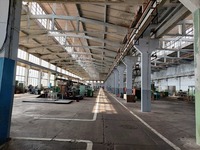
Total area 34 decares, 2 halls (total area 8510 sq.m) and admin. building (3 floors, GFA 2217 sq.m), operating business, good location, cranes for loading and unloading (lifting capacity 2x1 t, 3, 5, and 12 t), electrical connection - 110/20 kV with two underground 20 kV power lines, substation
|
 |
Operating enterprise with excellent financial results, 14.6 decares total area with excellent location, 3 halls (total area 1600 sq.m and height 11 m), cranes for loading and unloading activities (lifting capacity 13 t), admin. building (360 sq.m), warehouses and active store
|
 |
Blagoevgrad
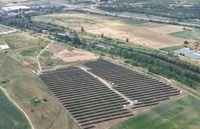
111 decares of owned land (in two adjacent plots of 55 decares each) at the entrance of the city from "Struma" highway
|
 |
Samokov, Sofia region
The property is suitable for warehouse, production, logistics, or commercial activities and offers excellent conditions for business development or investment. The facility includes storage halls, sheds, and an administrative building. Electricity, water, and sewage are provided. The property is fenced, with a spacious yard and convenient access for heavy trucks. The large plot area allows for additional construction and development of various activities.
|
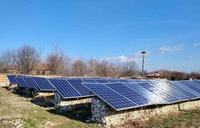 |
Municipalities: Chirpan, Bratya Daskalovi, Brezovo, Panagyurishte, and Parvomay
Total area: about 40 decares of owned land in the regions of Plovdiv and Stara Zagora, 29 installed PV plants, each with a capacity of 29,700 Wp, 3 additional properties with development potential
|
|
|
Bulgarian Industrial Association
|
| |
|
World
|
| |
|
Europe |
|
The United States is responsible for about a third of the increase in global carbon emissions through 2025 as higher gas prices push power producers back to coal, according to a report by the Energy Institute, a partnership with Ember, the Kearney Institute and KPMG, cited by Reuters. The report said U.S. coal consumption jumped 10 percent last year, reversing the shift to cleaner fuels and helping to boost overall emissions. Global carbon emissions from the energy sector rose 1.1 percent to 35,806 million metric tons of carbon dioxide. More than a third of that increase was due to increases in the United States and North America, which contradicted a 10-year trend of emissions reductions of 0.7 percent. Global energy demand continues to grow. Total energy supply increased by 1.7% compared to 2024, with renewables contributing the largest share of this increase. Renewable energy generation increased by 9.1%, led by a 30% increase in solar power. Carbon emissions from the energy sector in Europe increased by 0.5%, while those in China increased by 0.7% in 2025. Electricity demand grew faster than supply, increasing by 3% year-on-year, thanks to electric vehicles, data centers and artificial intelligence. Global oil consumption rose by 1.3% in 2025 to 103 million barrels per day, compared to an increase of 1.1% in 2024, while production grew by 3.5%. In China, gasoline and diesel use declined last year, continuing a trend seen in 2024. Growth in gas demand is concentrated in Europe, the Middle East and North America, with Europe and India relying on imports for almost half of their supplies.
|
America |
|
More central banks around the world plan to reduce, rather than increase, the share of the dollar in their portfolios over the next decade as political risks surrounding the U.S. currency rise, a survey of public investors showed. It is the first time the survey, conducted by the Official Monetary and Financial Institutions Forum (OMFIF), has reported such a trend away from the dollar. The findings coincide with a global debate over the role of the U.S. dollar as a major reserve currency, fueled by uncertainty over U.S. policy and heightened geopolitical risks. The London-based think tank, founded in 2010, also found that among the 90 central banks, public pension funds and sovereign wealth funds surveyed, there is a desire to significantly increase the use of artificial intelligence from current levels. The survey participants, who together manage assets worth about $10 trillion. The dollar is increasingly accepting volatility as a permanent feature and is testing new approaches to dealing with it, including applying artificial intelligence to the problem. There is no clear alternative to the dollar, and it has gained 3% so far this year, thanks to higher US interest rates, a thirst for American assets and a flight to safety caused by the US-Iran war. But some 79% of central banks and 60% of public funds believe that the global monetary system is transitioning to a “multipolar” world. Currencies other than the eight largest are gradually gaining ground among reserve assets. Central banks are looking to increase the share of the Norwegian krone and the New Zealand dollar, and are also showing increased interest in the British pound. Respondents also confirmed their intention to increase the amount of euros and Chinese yuan they hold, but said that structural challenges are hindering the development of both currencies. However, almost all respondents consider the yuan to be an effective means of portfolio diversification. Gold, which has hit a series of record highs and is held in the reserves of 82% of central banks, “has become a central element of the reserve management strategy,” the survey said. In the short term, it is the asset in which central banks plan to increase their holdings the most, with 30% of respondents planning to increase their holdings in the next one to two years. The use of artificial intelligence is also growing. More than 66% of central banks plan to increase the integration of artificial intelligence in the short term, the report said. No central bank in an advanced economy and only 9% of central banks overall reported being satisfied with the current level of use. Banks use artificial intelligence mainly for data analysis and back-office functions. But there is a divide, with over 89% of central banks in advanced economies using AI compared to 44% in emerging markets. Among public funds, demand for physical assets such as infrastructure and real estate is outpacing other assets, with nearly 60% planning to increase their share in the next year or two. The survey also shows a shift in sentiment towards emerging markets, with 38% of global public funds planning to increase their share in emerging economies, up from 27% last year. Interest in increasing investment in emerging markets is outpacing the drive to increase investment in advanced economies, which has fallen to 25% from 47% last year. The most attractive markets are the US and China, partly thanks to their role in the AI boom, the survey shows. Source: investor.bg
|
Asia |
|
China’s National Development and Reform Commission and the National Energy Administration have announced a series of energy system targets as part of a new five-year plan. China’s plans call for renewable energy to account for 50 percent of total electricity generation and for coal and oil consumption to peak by 2030. While acknowledging the planned increasing role of clean energy in China’s energy mix, groups focused on the environment and energy transition have criticized the new plan as lacking ambition, esgtoday.com reports. The new plan follows China’s release of climate and energy transition targets earlier this year that are also seen as cautious compared to its previous targets and progress on emissions reductions and energy efficiency. Additional 2030 targets included in the new plan include targets for coal to produce 25% of total energy consumption and for wind and solar to account for more than 50% of total installed electricity generation capacity. The latter target requires building about 170 GW per year, compared to 430 GW added in 2025. The goal is for electrification to lead to 35% of final energy consumption by 2030, compared to 30% in 2025, and a target for adding 300 GW of new energy storage systems. Source: economic.bg 
|
|
Indexes of Stock Exchanges
30.06.2026 |
| Dow Jones Industrial |
| 52 135.60 |
(63.00) |
| Nasdaq Composite |
| 26 213.70 |
(393.57) |
Commodity exchanges
30.06.2026 |
|---|
| |
Commodity |
Price |
|
| Light crude ($US/bbl.) | 69.62 |
| Heating oil ($US/gal.) | 3.2437 |
| Natural gas ($US/mmbtu) | 3.2230 |
| Unleaded gas ($US/gal.) | 2.9113 |
| Gold ($US/Troy Oz.) | 3 977.77 |
| Silver ($US/Troy Oz.) | 57.70 |
| Platinum ($US/Troy Oz.) | 1 541.64 |
| Hogs (cents/lb.) | 97.51 |
| Live cattle (cents/lb.) | 24 095.00 |
|
|
|
Pomorie |
|

Ancient Anhialo, as was known Pomorie in the remote past, was established in 6 – 5 century B.C. as a Hellenic colony. Its situation near important roads guarantees its prosperity and the propinquity of the village to a salty lake determines the development of the ancient craft – salt-production. The sea provides the charm of the other ancient craft in the region – fishery and the vine-growing remains from the worshipers of Bacchus, despite the fact it is not known whether they were local Tracians or Hellenic colonists. Survived through 25 centuries, many times burnt down and rebuilt again, the city hides in the land signs of raids of Romans, Byzantines, crusaders and Turks. The exponents from the archaeological collection are mute witnesses of the town’s millennial wild life. Unique historical and cultural monuments are the Thracian Beehive Tomb, museum Old Anhialo Salt-Mines, and churches Christ and St. Mother of God, St. Georgi Monastery and the architecture reserve Old Pomorie Houses.
Location
|
Archive
Business Industry Capital |
|


 Български



