Business Industry Capital
|


|
Bulgaria
|
|  | |
|
BNB Exchange Rates
(09.10.2026) |
|---|
| |
GBP |
|
1.18070 |
|
| USD |
|
0.89400 |
| CHF |
|
1.07230 |
| EUR/USD |
|
1.1186* |
|
ECB exchange rate |
|
Basic Interest Rate |
| |
as of 01.12 |
|
1.81% |
|
|
|
|
Financial news |
|
Job postings in Bulgaria in September declined by 9.5% compared to the same month last year. Demand for personnel is falling across most economic sectors. In the information technology sector, job listings are down by 22%. The most significant month-on-month increase in demand for personnel occurred in the "Trade and Sales" sector, which saw a rise of 7.4%. There was also an increase in job offers in the "Marketing and Advertising" sector—up by approximately 8.7%—as well as in the "Human Resources" category, which rose by nearly 8%. In healthcare and pharmaceuticals, the increase was more modest, at 2.4%. The highest number of job offers is found in the "Trade and Sales" sector, accounting for about 27% of all listings. This is followed by manufacturing with nearly 18% of listings, the hospitality and restaurant industry with 13%, and administrative and support services with approximately 11%. Source: Trud
In international trade outside the Eurozone, the dollar retains its leading position, with a significant portion of payments directed eastward, according to the company's 2026 International Payment Speed Barometer. The analysis covers over 252,000 SWIFT payments made by its European clients last year, allowing for the tracking of trends across individual markets, including Bulgaria. Payments originating from Bulgaria pass through the SWIFT network via an average of 1.5 intermediary banks, compared to a European average of 1.8. Among iBanFirst’s Bulgarian clients, the US dollar accounts for 67% of international payments by volume, versus an average of 56% among the company’s European clients. Meanwhile, the share of euro-denominated payments rose from 14% to 22%, while the share of lev-denominated payments fell from 12% to 4%. The primary payment corridor for Bulgarian companies consists of dollar payments to China, which accounted for 29% of all international payments made by iBanFirst’s Bulgarian clients last year. This is followed by dollar payments to Hong Kong (8%), euro payments to Turkey (5%), dollar payments to Turkey (3%), euro payments to Serbia and India (3% each), and dollar payments to the USA (2%). Alongside the dollar and the euro, the Bulgarian lev and the Chinese yuan rank among the key currencies used. According to final data from the National Statistical Institute (NSI) for 2025, imports of goods from third countries rose by 8.1% compared to 2024, with Turkey, China, Serbia, and the USA ranking among the countries with the highest import volumes by value. Hong Kong, however, stands out as an exception. Although it represents the second-largest payment corridor in iBanFirst’s data—accounting for an 8% share—it does not feature among Bulgaria’s top trading partners according to official merchandise trade statistics. The data also highlight the growing role of the United Arab Emirates. Payments in dirhams accounted for 1% of international payments made by iBanFirst’s Bulgarian clients in 2025, up from just 0.03% the previous year. During the same period, Bulgarian exports to the UAE grew by 31.4% to €200 million. Both trends align with the UAE’s increasingly significant role over the past year as a trade and financial hub connecting Europe, Asia, and the Middle East. However, payments to China are processed significantly more slowly than those to the USA. Only 9% of dollar payments from Bulgaria to China arrive in under two hours—slightly below the European average of 12%. By comparison, 65% of dollar payments to the USA arrive within the same timeframe, even though the average number of intermediary banks is very similar for both corridors. Dollar payments from Europe to China typically pass through US correspondent banks within the same business day, reaching the recipient's bank in China before the start of the local business day. Payments from Bulgaria traverse the SWIFT network via an average of 1.5 intermediary banks, compared to an average of 1.8 for Europe, indicating that Bulgarian payments pass through fewer intermediaries than the European average. However, the primary delay is not linked to the number of participants in the chain, but rather to the final stage. According to SWIFT data, 80% of the total processing time for a payment is attributable to the wait for funds to be credited by the recipient bank. Approximately half of all global SWIFT payments are denominated in dollars, as the interbank network for this currency—centered around major financial hubs in the US and Europe—faces no real competitor, not even the euro. While the Chinese yuan continues to expand its international presence, it still relies on an infrastructure that is more concentrated and less flexible. Most institutions connected to China’s Cross-Border Interbank Payment System (CIPS) have only indirect access to it, adding extra steps and time to the payment process. Economists refer to this as the "dominant currency paradigm." Companies use the dollar because their suppliers, customers, financing arrangements, and hedging instruments are already tied to it. A 2025 IMF study shows that even countries with weaker geopolitical ties to the US continue to rely heavily on the dollar for trade payments. This creates a system that self-perpetuates the leading role of the US currency—a position that, for the time being, no other currency has managed to challenge. Source: investor.bg 
|
Companies |
|
Nearly 100 Bulgarian companies will receive €61.5 million to modernize the production of defense and dual-use goods. This support is provided under a procedure within the "Competitiveness and Innovation in Enterprises" Program, managed by the Executive Agency "European Funds for Competitiveness" under the Ministry of Innovation and Digital Transformation (MIDT). The European funds will be used to purchase machinery, facilities, equipment, and specialized software, as well as patents, licenses, and know-how. The approved projects include the following large enterprises: ALUCOM AD (€1,109,500 in grant funding), MTG-DELFIN AD (€2,824,473.40), MILARA INTERNATIONAL OOD (€3,562,142.50), DUNARIT AD (€3,217,000), ALUPLAST-ZHTG OOD (€1,200,000), TOMIKA-METAL AD (€1,431,900), and VAZOVSKI MASHINOSTROITELNI ZAVODI EAD (€3,578,547). The following 14 medium-sized enterprises also have approved projects: RAIS OOD (with grant funding of €1,522,200), STARK BULGARIA EOOD (€257,070), KIRKOVO OOD (€315,120), ATRA EXPORT OOD (€320,700), TM-TECHNOLOGY AD (€400,800), OPTICOELECTRON GROUP AD (€1,533,873.60), STARK TECHNOLOGY AD (€1,439,902.80), MONI MG OOD (€392,315.40), NRG SOFT EOOD (€615,360), ENHANCE OOD (€1,029,776.40), AYVAZ N OOD (€1,530,000), PAK Design EOOD (€1,532,580), 2R - BULGARIA EOOD (€1,445,136), and MIK-BG EOOD (€1,365,214.80). The approved companies will be invited by the Executive Agency under the Ministry of Innovation and Growth to sign contracts. Source: 24 chasa
The amount of the long-term loan granted to Bulgartransgaz EAD by United Bulgarian Bank (UBB) for the construction of the Vertical Gas Corridor is being increased by €25 million, bringing the total to €127,258,370. The Council of Ministers has authorized this increase. The loan was originally granted on September 12, 2025. The additional amount is a prerequisite for increasing the loan principal and extending the drawdown period until December 31, 2026. The Vertical Gas Corridor initiative is a strategic energy infrastructure project aimed at enhancing the security and diversification of natural gas supplies in Southeast and Central Europe. It is a joint undertaking by the gas transmission system operators of Bulgaria, Greece, Romania, Hungary, Slovakia, Ukraine, and Moldova. The additional funds will be used to complete two investment projects within the framework of the Vertical Gas Corridor: "Increasing natural gas transmission capacity at the Kulata/Sidirokastro interconnection point in the direction from Greece to Bulgaria" and "Increasing natural gas transmission capacity at the Negru Vodă/Kardam interconnection point in the direction from Bulgaria to Romania." Mini Maritsa-Iztok EAD extracted 10,135,713 tonnes of lignite coal during the first nine months of 2026, representing 106 percent of the target set in the company's business plan. All orders from consumers within the complex are being fulfilled in accordance with agreed quality specifications, with increased delivery volumes to counterparties recorded in recent weeks. Production for the final quarter of the year is projected to exceed 6 million tonnes—approximately 173 percent of the planned figure. Annual output is expected to reach 16 million tonnes, or about 124 percent of the business plan target, Mini Maritsa-Iztok EAD further reports. Mining operations across all three mines are proceeding with efficient extraction workflows and guaranteed stability of working and non-working slopes as well as overburden dump benches. Alongside production activities, the company is in the final stages of preparations for the autumn-winter operating period. Source: BTA
Kaufland will create 90 new jobs with the opening of its newest hypermarket in Sofia—located at 46 Lyublyana Street in the Ovcha Kupel district—which is expected to open to customers in late October. This will be the retail chain's 21st location in the capital. This year, Kaufland marks the 20th anniversary of its entry into the Sofia market. Over this period, the company has made significant investments in the city, exceeding €300 million. The retailer reports that total payments for employee salaries and social benefits in the capital amount to over €180 million. The company currently employs over 8,000 people nationwide. Key operational figures for the chain include: 72 hypermarkets nationwide, presence in 35 cities, 90 new jobs in Sofia, and a total of 21 stores in the capital. Source: Darik radio
The Zlatna Panega cement plant, part of the Greek TITAN Group, reported its highest revenue since the 2009 financial crisis. A boom in the construction market drove the company's turnover up to €93.1 million. The company continues to increase its use of recovered waste, and 35% of its energy consumption is now supplied by its own solar park. Sales volume grew by 6% and revenue by 17%. TITAN Zlatna Panega attributes this performance to increased sales volumes, an expansion of ready-mixed concrete operations—supported by strong local demand—and the overall growth of the construction materials market, driven primarily by a rising number of residential and logistics projects in major cities. Net profit also rose, reaching €15.2 million (up from €14.6 million the previous year). These results were underpinned by investments totaling €4.6 million last year, directed toward increasing production capacity in concrete operations (where the company runs three concrete plants), as well as laboratory equipment and critical infrastructure. The workforce grew slightly, reaching approximately 250 employees by December. There has been further growth this year, with the company employing over 270 people as of July. Telematic Interactive Bulgaria AD will pay its shareholders a new dividend of €0.15 per share, totaling just under €2 million. The decision is set to be voted upon at the extraordinary general meeting of shareholders scheduled for October 9, 2026, in Sofia. The proposal involves distributing a portion of the company's retained earnings. Subject to shareholder approval, Telematic Interactive Bulgaria AD will pay the dividend in a single installment within 60 days of the general meeting, in accordance with the terms and procedures proposed by the Board of Directors. Earlier this year, the company's shareholders voted for a total gross dividend of €0.33 per share. A dividend of BGN 0.25 (€0.1278)—approved at the end of 2025—was also paid out at the beginning of the year. In the first half of 2026, the company reported total standalone revenue of €37.2 million, a 16% increase compared to the same period last year. Net profit for the period rose by 24.1% to €5.35 million. Revenue growth was driven by both the casino and sports betting segments. Casino revenue reached €32.3 million, representing a 13% year-on-year increase, while sports betting revenue rose by 31% to €4.3 million. The company is currently working on the next strategic step in its development: a secondary listing on a European stock exchange. Telematic Interactive Bulgaria AD will partner with Edison—a specialized communications firm—to help reach the widest possible audience of foreign investors and attract them as shareholders through roadshows. MFG Invest AD proposes the distribution of just over €1.9 million as an interim dividend, amounting to a gross €0.179072 per share. The company's management is convening an extraordinary general meeting for shareholders to approve the dividend. The meeting is scheduled to take place on November 10, 2026, in Sofia. The company's net profit for the period from January 1, 2023, to June 30, 2026, stands at €4.5 million, while the profit available for distribution—following adjustments made in accordance with the company's statutes—amounts to nearly €3.9 million. Source: investor.bg
|
|
Investments
|
| |
|
|
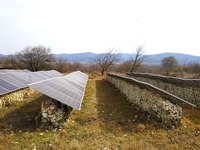 |
 Municipalities: Chirpan, Bratya Daskalovi, Brezovo, Panagyurishte, and Parvomay Municipalities: Chirpan, Bratya Daskalovi, Brezovo, Panagyurishte, and Parvomay
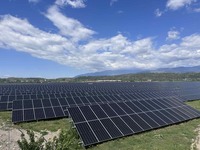
Total area: about 40 decares of owned land in the regions of Plovdiv and Stara Zagora, 29 installed PV plants, each with a capacity of 29,700 Wp, 3 additional properties with development potential
|
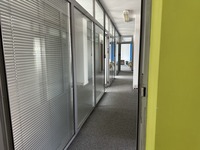 |
Sofia Center
500 sq.m, functionally distributed between open space area, private offices, meeting room, server room, and restroom
|
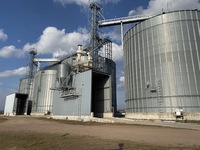 |
Kameno, Burgas region
Area: 12.9 decares
Built-up area: 1,485 m2
4 metal silos with a total capacity of 21,200 m3;
Main equipment: • laboratory • scales • service building • 2 unloading stations |
 |
Samokov, Sofia region
The property is suitable for warehouse, production, logistics, or commercial activities and offers excellent conditions for business development or investment. The facility includes storage halls, sheds, and an administrative building. Electricity, water, and sewage are provided. The property is fenced, with a spacious yard and convenient access for heavy trucks. The large plot area allows for additional construction and development of various activities.
|
 |
Blagoevgrad
111 decares of owned land (in two adjacent plots of 55 decares each) at the entrance of the city from "Struma" highway
|
|
|
Bulgarian Industrial Association
|
| |
|
World
|
| |
|
Europe |
|
A report by the European Court of Auditors (ECA) indicates that 3.8 percent of the EU budget was spent incorrectly last year. Irregular payments were identified in connection with post-COVID economic recovery plans. The ECA found that EU borrowing could reach one trillion euros by 2027 and warned that rising aggregate debt could place increasing pressure on future budgets and policy decisions. The report notes that the estimated error rate for EU budget expenditure remains excessively high—a factor of significance as negotiations begin on the next long-term EU budget running through 2034. According to the assessment, irregularities in funds spent under recovery plans amounted to €45.4 billion. By the end of 2025, €237.5 billion out of a total of €359.9 billion had been disbursed, with only three of the 27 member states having utilized at least 80 percent of the funds. Of the 37 payments made last year, nine did not comply with established rules and conditions; violations of public procurement regulations and irregularities concerning state aid were identified. Regarding standard EU budget expenditure, the report clarifies that the errors made were significant and widespread, with the highest error rates found in cohesion funding. The error rate in cohesion policy rose from 5.7% in 2024 to 6.6% last year, while in agriculture and the environment, it increased from 2.6% to 3.9%. The EU’s growing debt could place a heavy burden on future budgets. EU borrowing could reach €1 trillion by 2027, with interest costs alone potentially amounting to €93 billion for the 2028–2034 period. The European Commission’s proposals for the next budget would allow for significant new borrowing to support Ukraine and EU member states' national plans, as well as the potential use of the severe crisis mechanism. These would involve substantial sums; for instance, loans for Ukraine approved or agreed upon since 2014—including the €90 billion assistance loan—total €170.1 billion, of which €70.3 billion had been disbursed by the end of last year. The ECA urges caution regarding future budgets, noting that without an agreement on new revenue sources, the EU budget could face a significant shortfall, necessitating difficult decisions such as higher national contributions and scaled-back targets. The Court clarifies that the error rate it calculates is not an indicator of the level of fraud, inefficiency, or waste. This figure provides an indication of the amount of funds not used in accordance with EU and national rules. During its audit, the Court identified 17 cases of suspected fraud, which were referred to the relevant authorities, the European Court of Auditors (ECA) stated. A statement from the European Commission regarding the same matter notes that the error rate for the past year (3.8%) is comparable to that of the previous year (3.6%) and significantly lower than in 2023 (5.6%) and 2022 (4.2%). Most errors and irregularities are not linked to fraud, and the projects in question continue to deliver positive results in line with EU policy objectives, the Commission added. Regarding the past year, the institution specified that preventive and corrective measures worth €9 billion—including the interruption and suspension of payments as well as financial corrections—were applied following checks by the Commission and EU Member States. Source: BTA
|
America |
|
According to data published by the US Customs Service, the US trade deficit widened to $105.6 billion in August from $92.8 billion in July, reaching its highest level since March 2025. This figure exceeded the expectations of analysts surveyed by Trading Economics ($102 billion). Imports of US goods and services rose by 4.3% compared to July, reaching $420.8 billion. Export growth was more modest, rising 1.4% to $315.2 billion. Oil imports surged by 28% to $15.4 billion, hitting their highest level since May 2024 (Kuwait, having resumed oil exports, accounted for 30% of the increase in physical delivery volumes). Amid the expansion of artificial intelligence infrastructure, the US also saw a rise in high-tech imports: semiconductor purchases increased by 18% to $15.4 billion. Imports of industrial equipment rose by 17% to $9.2 billion. Imports of civil aircraft also nearly doubled, climbing to $2.2 billion from $1.3 billion in July. US exports rose, driven by shipments of industrial raw materials to other countries—up 8.9% to $77.8 billion—and business equipment (telecommunications, medical, etc.), which increased by 2% to $69.5 billion. Meanwhile, other categories of US exports declined in August. Shipments of consumer goods fell by 9.4% to $20.9 billion, primarily due to a drop in pharmaceutical exports (down 23.2% to $7.9 billion), while exports of automobiles and components decreased by 6.8% to $12.6 billion. Shipments of food products declined by 5.6% to $14.2 billion, amid a drop in soybean exports (down 39% to $1.3 billion); due to tariffs, China—one of the world's largest importers of this product—reduced its purchases from the United States. Consequently, contrary to the US administration's goals, the US trade deficit with major trading partners such as the EU and China widened in August: the deficit with the EU rose to €21 billion (up from $8.9 billion in July—the highest level since December 2025), while the deficit with China increased to $16.4 billion from $15.2 billion (the highest level since last December). Regarding the country-by-country breakdown, the trade deficit with Canada widened particularly sharply—more than doubling to $7.1 billion—while the deficits with Mexico ($27.7 billion) and Vietnam ($24 billion) reached new record highs. Source: Banker
|
Asia |
|
Kazakhstan will increase state funding for geological exploration tenfold. Approximately $500 million will be allocated to the sector over the next three years as the country accelerates its search for copper, gold, and rare-earth metals. Kazakhstan is preparing to build a new copper processing plant in Balkhash with a private investment of 750 billion tenge (approximately $1.7 billion). Construction is scheduled to begin in 2027, with production starting in 2030. Currently, the state-owned company Kazgeology is conducting surveys across seven regions, covering an area of 55,000 square kilometers. Detailed exploration has also commenced at 20 key sites. The Turkish mining company Miryildiz Mining will invest $482 million in gold mining and processing in Kazakhstan. Kazakhstan is also changing its approach to new deposits. The national mining company Tau-Ken Samruk first obtains the license, conducts exploration, and confirms reserves. Foreign partners are brought in at a later stage, once the projects have reached a more advanced level of readiness. Over the past year, the company has obtained three licenses for the exploration of gold, copper, and rare-earth metal deposits. To date, over 8 tonnes of gold and 150,000 tonnes of copper have been confirmed. At the "Karatas" deposit, the average copper content has risen from 0.35% to 0.46%. Artificial intelligence is also being utilized in the sector; a geological core analysis system, trained on data from "Zhosabay," currently achieves 80% accuracy, with the goal of reaching 95% by the end of the year. The new plant in Balkhash will have an annual production capacity of 300,000 tonnes of copper cathode. Additionally, it will produce 10 tonnes of gold and 1.5 million tonnes of sulfuric acid. The project is expected to help Kazakhstan increase its total copper production to over 800,000 tonnes per year. The plant is expected to create 1,200 permanent jobs, with 90% of the initial workforce consisting of Kazakhstani specialists. The technology will enable the recovery of up to 98% of the copper. Emissions are projected to drop to approximately 5,000 tonnes per year, down from 60,000 tonnes at the existing copper plant in Balkhash. The current facility, which has been in operation since 1938, accounts for about 51% of Kazakhstan's cathode copper production. Kazakhmys is currently implementing a modernization program for the facility valued at 21.8 billion tenge. 
|
|
Indexes of Stock Exchanges
08.10.2026 |
| Dow Jones Industrial |
| 51 350.60 |
(110.70) |
| Nasdaq Composite |
| 27 193.30 |
(-345.40) |
Commodity exchanges
08.10.2026 |
|---|
| |
Commodity |
Price |
|
| Light crude ($US/bbl.) | 91.91 |
| Heating oil ($US/gal.) | 4.7427 |
| Natural gas ($US/mmbtu) | 3.3163 |
| Unleaded gas ($US/gal.) | 3.2251 |
| Gold ($US/Troy Oz.) | 4 178.48 |
| Silver ($US/Troy Oz.) | 60.18 |
| Platinum ($US/Troy Oz.) | 1 675.87 |
| Hogs (cents/lb.) | 68.67 |
| Live cattle (cents/lb.) | 22 394.20 |
|
|
|
Ritlite Rock Formations (The Racks) |
|

Ritlite rock formations are situated west of the village of Lyutibrod, on the two valley slopes of the Iskar defile. They are shaped like parallel rock walls, which from far stick up exactly like the racks of a car, which is where their name came from. The most impressive among them are the four racks, situated on the left shore of the Iskar river. They gradually grow in height, starting from 50-80m and reaching 200m above the river. In ancient times, the Romans used these rock formations to block the way leading to the Iskar defile. According to one old legend, there was an iron gate here once, which closed the way to the ancient Bulgarian fortress of Serdika. There are many places of historical and natural interest around the defile – the old Bulgarian town of Koritengrad, in which region have been found 9 medieval Bulgarian churches; the historical Rashov dol; the Big Chukla; The Cherepish monastery. Nowadays, Ritlite are a popular climbing and tourist destination. They were officially declared natural phenomenon in 1938.
Location
|
Archive
Business Industry Capital |
|


 Български



