Business Industry Capital
|



|
Bulgaria
|
|  | |
|
BNB Exchange Rates
(03.06.2026) |
|---|
| |
GBP |
|
1.15650 |
|
| USD |
|
0.85840 |
| CHF |
|
1.09300 |
| EUR/USD |
|
1.1649* |
|
ECB exchange rate |
|
Basic Interest Rate |
| |
as of 01.12 |
|
1.81% |
|
|
|
|
Financial news |
|
Bulgaria's cash-based budget deficit is expected to reach EUR 2.5 billion by the end of May 2026, which represents exactly 2 percent of the country's projected gross domestic product. Preliminary data and estimates from the Ministry of Finance signal a significant fiscal expansion compared to the same period of the previous year, when the reported deficit under the Consolidated Fiscal Program amounted to EUR 1.3 billion, or 1.1 percent of the then GDP. In just thirty days, the negative balance has increased by nearly EUR 740 million. By the end of April, the fiscal deficit amounted to EUR 1.761 billion, which was then equivalent to 1.4 percent of the projected economic volume. This acceleration in May highlights the traditional movement of public spending in late spring, driven by the accumulation of current commitments and the acceleration of investment processes. On the revenue side, there is clear tax optimism, with the total volume of revenues, grants and donations forecast at EUR 17.3 billion, marking a growth of EUR 1.2 billion or 7.6 percent on an annual basis. A key factor for this improvement is tax revenues, which increase by EUR 1.4 billion, which is a nominal increase of 11.1 percent compared to May 2025. A positive impact is also exerted by revenues from grants and donations, which increased by EUR 0.4 billion. At the same time, non-tax revenues recorded a decrease of EUR 0.6 billion, mainly due to the regulatory change in the deadline for the contribution from the excess of revenues over expenses of the Bulgarian National Bank, the due date of which has been moved from April 30 to June 30. The statistical base is also further affected by lower dividend income from state-owned enterprises this year, as an extraordinary interim dividend was distributed in 2025, which artificially raised the then-current indicators. The serious expansion of the deficit is mainly due to the expenditure side of the budget, where the amount reaches EUR 19.9 billion, compared to EUR 17.4 billion for the same period last year. The Ministry of Finance explains this jump with the cumulative effect of several key factors. On the one hand, there is a strong base effect in social and health insurance payments due to the 8.6 percent indexation of pensions carried out in July 2025. On the other hand, serious pressure on current living expenses is exerted by the new increase in the minimum wage from January 2026, combined with additional compensation of salaries in the public sector by the amount of accumulated inflation for the previous year. In addition to current payments for wages and social needs, capital expenditures also recorded significant growth. This fiscal item is directly linked to the accelerated implementation of large-scale investment projects under the Municipal Investment Program, as well as to payments under the National Recovery and Resilience Plan, the finalization of which is of critical importance for the economy. Meanwhile, the country continues to strictly fulfill its international commitments, and by the end of May, 0.4 billion euros had been paid from the central budget for the contribution of the Republic of Bulgaria to the general budget of the European Union, in accordance with the current European legislation on own resources. Source: BTA
Bulgaria is on the verge of one of the largest restructurings of its energy sector. The Ministry of Environment and Water has put up for public discussion the Environmental Assessment Report of the Plan for Determining Priority Areas for the Development of Wind Power Plants. The document is a key element of the implementation of the European RED III Directive and of Bulgaria's efforts to accelerate the construction of renewable energy capacities, while reducing administrative barriers and environmental conflicts. The Bulgarian plan identifies 25 onshore priority areas in 19 regions of the country with a total potential for connecting new capacities of 2078 MW. They were selected through a spatial analysis that combines two main criteria - the presence of sufficient wind resources (average wind speed above 5.5 m/s) and the possibility of connecting to the electricity transmission grid - proximity to the infrastructure of the Electricity System Operator (ESO). The project covers land areas with a total area of over 11,000 sq. km, with the majority of them concentrated in Northwestern and Central Northern Bulgaria. The districts that fall into parts of these 25 zones include Vidin, Montana, Vratsa, Pleven, Veliko Tarnovo, Lovech, Gabrovo, Ruse, Targovishte, Razgrad, Stara Zagora, Sliven, Sofia Region, Sofia (capital), Pernik, Kyustendil. Currently, the construction of a wind farm in Bulgaria can take between three and five years just to go through the various permitting regimes. The new plan foresees that projects in the priority zones will go through shortened procedures, with the entire process to be completed within a maximum of 12 months, and the projects will receive priority when connecting to the grid.
|
Companies |
|
For the third consecutive year in 2025, sales of prescription and over-the-counter medicines in Bulgaria are reporting double-digit growth. It is 11.03% compared to the previous year and reaches 3.89 billion euros, commented Alexandra Bosco, General Manager for Romania, Bulgaria and Moldova of the global analytics company IQVIA. Prescription medicines remain the main driver of the market, while non-prescription segments provide a stable contribution. The prescription medicines market in 2025 reaches 2.99 billion euros. The hospital segment forms 36% of the total value and grows by 14%, while sales in the pharmacy network increase by 12% year-on-year. The strongest dynamics in the pharmacy channel are shown by anti-diabetic therapies, which grow by over 33% compared to the previous year, supported by sustained interest in anticoagulants and interleukin inhibitors, according to the IQVIA analysis. In the hospital sector, the growth driver remains oncology drugs, which add nearly EUR 97 million to the market compared to 2024. The over-the-counter (OTC) market reaches EUR 0.9 billion, recording a growth of 5.7%. Development is mainly driven by products for everyday health needs - painkillers, cold and flu remedies and probiotics, which remain among the most sought after by consumers. Within the OTC segment, sales of registered drugs increased by 3.17% and generated over EUR 430 million in value. The nutritional supplements segment continues to grow, but this time it is single-digit - 8.1%, with the market recording sales of over EUR 475 million. For the second consecutive year, the American Merck Sharp & Dohme (MSD) is the sales leader in the sector. In second place for the second consecutive year is AstraZeneca. Switzerland's Roche loses its third place to Swixx Biopharma and in 2025 it is fourth. In fifth place among innovative corporations or the companies that represent them is the Swiss Novartis. Among the five leading companies in the sale of non-prescription drugs in value, the leaders are Stada, Teva and Sopharma. According to IQVIA's analysis, the wholesale market remains relatively unchanged. The four largest distributors - Phoenix Pharma, Sopharma Trading, Sting and Pharmnet - continue to dominate the sector, holding about 80% of the supplies of prescription and non-prescription drugs in the hospital and pharmacy channel. The concentration is even more pronounced in the pharmacy segment, where their share exceeds 90%. Sting retains its leading position in the pharmacy channel with a market share of 29.42%, while the hospital channel remains more fragmented and Sopharma Trading is establishing itself as the leading player with a market share of 22.3%. Over the past five years, the country's pharmacy network has been gradually expanding, with the total number of outlets increasing by 5.5%, according to IQVIA's analysis. So-called "independent" pharmacies, owned by master pharmacists and participants in small or no chains, will retain a significant presence in 2025, forming nearly 51% of all outlets. At the same time, large chains with more than 50 pharmacies carry out over 45% of combined sales of prescription drugs and registered over-the-counter products, which is a clear sign of ongoing consolidation among the leading market players. The Bulgarian National Bank (BNB) has made a transfer to the Ministry of Finance in favor of the state budget of the Republic of Bulgaria in the amount of EUR 281 million. The transfer was made in accordance with the BNB Law and is at the expense of the annual excess of revenues over expenditures of the BNB for 2025. Source: 24 chasa
There are two candidates who want to participate in the drilling of the gas storage facility in Chiren - these are "Oil and Gas Exploration and Production" and the "Houston Chiren 2026" consortium. The deadline for submitting documents expired at the end of May, and the budget of the public procurement is 55.9 million euros excluding VAT. The first of the participants - "Oil and Gas Exploration and Production" is part of the "Chimimport" group. The "Houston Chiren 2026" consortium includes the Bulgarian "Interconnecta", the Romanian "Habau", which participates in part of the Vertical Gas Corridor, as well as another Romanian company - "Forage Sonde", which specializes in drilling and providing technical services in the oil and gas sector. "Interconnecta" is owned by Kamelia Taskova, close to Hristo Kovachki, and the Kazakh Orifian Shadiev also has a smaller share. Taskova is also the sole owner of Hydro Power Utilities - another company gravitating around the businessman's group. The order is for the construction of several underground facilities - three new exploitation wells and possibly three more as an option, all of which concern the expansion of Chiren's capacity. The evaluation criterion will be the most economically advantageous offer based on the quality/price ratio. The most points will be awarded to the implementation of the individual drilling stages, and the least - to the term for part of the activities. For the activities under the entire order, it is no less than 240 and no more than 300 calendar days. The previous order was terminated due to irregularities in the submitted offers last year, which also led to the suspension of the tender itself. In addition to "Oil and Gas Exploration and Production", the associations "Divicom Texas Drilling 2025" (SAIE, associated with Hristo Kovachki) and "Energico Houston Drilling" (associated with one of the former heads of "Bulgartransgaz" - Ivan Drenovichki) participated in the procedure at that time. The announcement of the tender now comes after the Supreme Administrative Court rejected the appeals of two of the candidates against their removal and the suspension of the order. Although accompanied by scandals, the expansion of the "Chiren" gas storage facility remains key. We are starting the expansion project again with 3+3 drilling and, if they are properly laid, an increased capacity of up to 850 million cubic meters will be achieved (with annual consumption of about 3 billion cubic meters - author's note). This would allow the purchase and storage of larger quantities of gas at competitive prices and their use when the raw material becomes more expensive on international markets. Pwrteams, a subsidiary of Nortal, specializing in the provision of IT outsourcing services, began operating under the name Nortal. In Bulgaria, the company has been operating since 2007 and was until recently known as Questers. In 2023, Nortal acquired Questers, and subsequently the Bulgarian company began operating as Pwrteams. The company's team in our country numbers over 300 people. Pwrteams works with clients in Europe and North America, including companies such as News UK, Funding Circle and TUI, and has a global team of over 750 specialists in Bulgaria, Ukraine, Poland, Serbia, Lithuania, Estonia and Latin America. Nortal is an international technology company with over 25 years of experience in implementing large-scale digital projects for governments, healthcare institutions and leading international businesses. The company has over 2,700 experts worldwide in 30 offices in Europe, the Gulf region, Latin and North America. Source: economy.bg
The Gabrovo dairy company "ElVI", owned by Vesselin Krastev and Ilian Dyankov, produces about 60 tons of yogurt and 20 tons of fresh milk per day under the brands "Bozhentsi", "Terter" and "Bulgarea" and reports about 30 million euros in revenue for 2025. In 1998, the Swiss foundation FAEL granted the entrepreneurs a loan with which they purchased equipment for the production of yellow cheese. The beginning of their own agricultural business was laid in 2003 - they bought land, and in an old building, which is a legacy of a former TKZS (or labor cooperative agricultural farm), they began raising about 60-70 cows. The production of "Bozhentsi" began in 2005, which was also the beginning of a dispute with the Patent Office, which delayed the registration of the brand. The saga ended only in 2011, during which time Krastev and Dyankov were forced to fight on another front. The distributor "Germa-95" attempted to register the "Bozhentsi" brand for itself and even for a certain period of time offered "doubles" in the retail network - "Bozhentsi" dairy products with an identical vision to those produced by the Gabrovo company. However, the CPC ordered the cloning to stop and fined it for brand imitation. In 2006, the company built a modern yogurt factory to guarantee the production of products of consistently good quality. Sales expanded to the Veliko Tarnovo and Sofia regions, and "Bozhentsi" became a well-known brand throughout the country. A year later, the partners bought the "Terter" and "Bulgarea" yogurt, yellow cheese and cheese brands from the "Ficosota" holding, which are in the highest price segment. They started producing them, changed the packaging, offered larger weights at lower prices, invested in marketing and advertising. The business was transformed with the construction of a modern building for the animals and the subsequent expansion of the dairy farm. At that time, the partners already had 6,000 acres of agricultural land and raised over 800 cows to the sound of classical music, with water cooling in the summer, free movement, mattresses, and balls to play with. The animals allowed the partners to build a biogas plant, in which they invested 2.5 million euros. It provides the company with energy independence and the opportunity for the owners to sell excess electricity in the EON system. The plant processes between 60 and 70 tons of biodegradable waste per day, including manure and food waste from the farm, as well as whey from the production of cheese and yellow cheese. The excess biomass is used as fertilizer to nourish the agricultural areas. In 2023, "ElVI" already has a photovoltaic installation for its own needs with 700 kWh of installed capacity, and a year later - its own treatment plant. The company's latest investment is from last year - 2.2 million euros for a modern line for pasteurized fresh milk in bottles with a capacity of 6,000 liters per hour. The company supplies 12 tons of milk per day from its own dairy farm, but needs 70-75 tons of raw material per day. "ElV" also sells abroad under the "Bozhentsi" brand, mainly for the Balkan diaspora. The company already has a robot that arranges yogurt on a pallet. The construction of a warehouse for consumables, located on 2,000 square meters, whose estimated value is 1.5 million euros, is on the agenda. The construction of a new yogurt line with an investment of two million euros should also be completed within 36 months, and the plans also include a new cheese workshop with fully automated production processes. Atanas Bostandzhiev took a new step towards acquiring Levski after the businessman's company "Sofia Capital" (in the process of being established) ("Acquiring Entity") sent a message to the CPC regarding the acquisition of the football club and its subsidiaries "Georgi Asparuhov Stadium" and "Sport Marketing" EOOD. "Sofia Capital" AD, acting through its founders Gemcorp Sub Holdings Limited, a company incorporated and existing under the laws of Abu Dhabi Global Market, United Arab Emirates and Gemcorp Employment Services Limited, a company registered under the laws of England and Wales, has announced its intention to implement a concentration by acquiring direct control over "Professional Football Club Levski" AD (the "Acquired Entity") and indirect control over its subsidiaries "Stadium Georgi Asparuhov" EAD, UIC 207690616, and "Sport Marketing" EOOD, UIC 204390231. Bostandzhiev is the founder of Gemcorp Sub Holdings Limited. In the spring, he made a commitment to invest in the sports and technical development of the first team and in the expansion and improvement of the infrastructure related to the development of children's and youth football, and other key areas for the club. Bostandzhiev also promised the construction of a new stadium, and according to him, such a facility would cost in the range of 110-130 million euros. After the ownership of the champions is changed, Nasko Sirakov will remain president, but will not have shares in the company. Source: Duma
At its meeting of 2.6.2026, the FSC decided: 3. Approves amendments and supplements to the Regulations on the organization and activities of the Universal Pension Fund "LEV INS PENSION INSURANCE", the Professional Pension Fund "LEV INS PENSION INSURANCE" and the Voluntary Pension Fund "LEV INS PENSION INSURANCE". 4. Enters an issue of shares issued by "Smart Organic" AD, Sofia, in the register of public companies and other issuers of securities, for the purpose of trading on a regulated market. The issue is in the amount of 490,729 ordinary, registered, dematerialized, freely transferable shares with voting rights, with a nominal value of 0.51 euros each, with ISIN code BG1100005153. 5. Deregisters a bond issue issued by "Chernomorski Holding" AD, Burgas, from the register of public companies and other issuers of securities. The issue is in the amount of BGN 20,000,000, distributed in 20,000 ordinary, interest-bearing, dematerialized, registered, freely transferable, secured, non-convertible bonds, with a nominal and issue value of one bond in the amount of BGN 1,000 each, with ISIN code BG2100006191. Source: Company information
tbi bank will exercise its right to early redemption of a bond issue of EUR 10 million, issued in June 2023 (maturity in June 2027, 9.0% annual interest), after having already received all necessary regulatory approvals and announced its decision last month. The transaction will take place on June 9 this year, and investors will also receive the yield accumulated to date. This marks the end of the first MREL bond issue for professional investors. Over the past five years, tbi bank has established itself as a leader in the public bond market in Bulgaria, having raised nearly EUR 150 million. This includes the largest MREL bond issue issued on the Bulgarian market (worth EUR 60 million, 3-year maturity, 7% annual interest). Source: investor.bg
|
|
Investments
|
| |
|
|
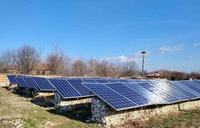 |
 Municipalities: Chirpan, Bratya Daskalovi, Brezovo, Panagyurishte, and Parvomay Municipalities: Chirpan, Bratya Daskalovi, Brezovo, Panagyurishte, and Parvomay
Total area: about 40 decares of owned land in the regions of Plovdiv and Stara Zagora, 29 installed PV plants, each with a capacity of 29,700 Wp, 3 additional properties with development potential
|
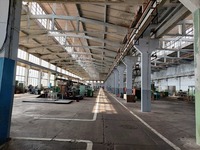 |
Pleven Region
Total area 34 decares, 2 halls (total area 8510 sq.m) and admin. building (3 floors, GFA 2217 sq.m), operating business, good location, cranes for loading and unloading (lifting capacity 2x1 t, 3, 5, and 12 t), electrical connection - 110/20 kV with two underground 20 kV power lines, substation
|
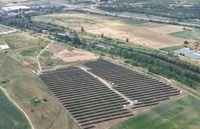 |
Blagoevgrad
111 decares of owned land (in two adjacent plots of 55 decares each) at the entrance of the city from "Struma" highway
|
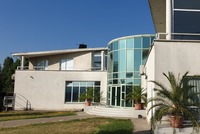 |
Sofia
Operating enterprise with excellent financial results, 14.6 decares total area with excellent location, 3 halls (total area 1600 sq.m and height 11 m), cranes for loading and unloading activities (lifting capacity 13 t), admin. building (360 sq.m), warehouses and active store
|
 |
Sofia region
The property is suitable for warehouse, production, logistics, or commercial activities and offers excellent conditions for business development or investment. The facility includes storage halls, sheds, and an administrative building. Electricity, water, and sewage are provided. The property is fenced, with a spacious yard and convenient access for heavy trucks. The large plot area allows for additional construction and development of various activities.
|
|
|
Bulgarian Industrial Association
|
| |
|
World
|
| |
|
Europe |
|
Eurozone inflation reached 3.2 percent in May on an annual basis, the highest level since September 2023, according to the latest preliminary data from Eurostat on consumer price developments in the eurozone. In April, consumer prices in the eurozone countries rose by 3 percent. Compared to the previous month, inflation in the currency zone in May was 0.1 percent. In Bulgaria, consumer prices rose by 6.3 percent last month, according to the Harmonized Index of Consumer Prices (HICP). This is the highest growth rate of domestic consumer prices since September 2023. The eurozone countries with the highest annual inflation in May were Bulgaria, Lithuania (5.1 percent) and Greece (5 percent). Monthly inflation in Bulgaria amounted to 0.3 percent. In April, annual inflation in Bulgaria rose sharply to 6 percent, and monthly inflation to 1.8 percent. The National Statistical Institute (NSI) announced that the consumer price index (CPI) in Bulgaria increased by 7 percent year-on-year in May, as well as by 0.2 percent compared to the previous month.
|
America |
|
The administration of US President Donald Trump is undertaking a major change in its trade policy aimed at stimulating domestic heavy industry. The White House announced the signing of a new proclamation that changes the customs regime for imports of steel, aluminum, as well as key categories of industrial and agricultural equipment. The measure is part of Washington's broader economic strategy to promote production within the US and attract new investment in the industrial sector. In contrast to the previous purely protectionist approach, the new rules introduce flexible relief for companies that integrate American raw materials into their production chains. The new regime sets specific parameters for facilitating trade with partners. Duties on certain types of agricultural and construction equipment, including bulldozers and forklifts, are reduced from 25% to 15% when the equipment is imported from countries with active trade agreements with the US. In addition, foreign manufacturers will be able to benefit from a greatly reduced customs rate of 10%. The condition for this preference is that imported capital equipment must contain at least 85% steel and aluminum produced and processed within the United States. These rules come into effect as a temporary investment incentive and will remain active until December 31, 2027. The White House seeks to generate stable demand for American metals and increase the utilization of domestic metallurgical capacity, which will support businesses and create new jobs. From a political perspective, Washington reaffirms its position that the steel and aluminum industries remain strategically important to the country's national security - an argument that has been the basis of protective tariffs in recent years. With this move, the Trump team is trying to balance a fine line between protecting domestic raw material producers and preserving the competitiveness of US companies that rely on imported machinery. The measures are expected to attract long-term capital in the processing of metals, which are critical to the US automotive, construction and defense sectors.
|
Asia |
|
Turkey, Bulgaria, Georgia and Azerbaijan are working on a regional electricity corridor to transport electricity from the Caucasus to Europe. The project will expand cooperation between the countries beyond oil and natural gas, focusing on electricity trade and the development of green energy infrastructure. The plan envisages the construction of a cross-border network that will facilitate the exchange of electricity between the countries and help integrate renewable energy sources. “We will create the electricity version of TANAP,” Bayraktar said, drawing a parallel with the Trans-Anatolian Gas Pipeline, which supplies Azerbaijani natural gas to Europe through Turkey. According to Turkish President Recep Tayyip Erdogan, the green electricity transmission and trade initiative involving Turkey, Azerbaijan, Georgia and Bulgaria will contribute to greater energy security and closer regional cooperation.

|
|
Indexes of Stock Exchanges
02.06.2026 |
| Dow Jones Industrial |
| 51 306.30 |
(-53.00) |
| Nasdaq Composite |
| 27 093.90 |
(7.09) |
Commodity exchanges
02.06.2026 |
|---|
| |
Commodity |
Price |
|
| Light crude ($US/bbl.) | 92.91 |
| Heating oil ($US/gal.) | 3.7168 |
| Natural gas ($US/mmbtu) | 3.1633 |
| Unleaded gas ($US/gal.) | 3.1311 |
| Gold ($US/Troy Oz.) | 4 468.32 |
| Silver ($US/Troy Oz.) | 74.69 |
| Platinum ($US/Troy Oz.) | 1 928.00 |
| Hogs (cents/lb.) | 101.44 |
| Live cattle (cents/lb.) | 24 112.20 |
|
|
|
King Ivan Shishman (1371- June 3 1395) |
|
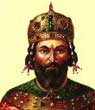
Ivan Shishman, Ivan Alexander's firstborn son succeeded his father to the throne in Turnovo in 1371, but the state had become a shadow of one-time great Bulgaria. Almost all ties with the other two Bulgarian states, Ivan Sratsimir's Vidin principality and the Dobroudja principality of Despot Dobrotitsa, had been severed. Ivan Shishman's struggle to survive under the pressure of the Ottoman offensive soon turned into a desperate and valiant, though hopeless fight. The Turks ravaged the Bulgarian lands, leaving terror and ruin behind them. Ivan Shishman watched them conquer Macedonia and the Rhodopes, aware that he was not strong enough to help Bulgarian strongholds in the Rhodopes against the assailants. Northern Thrace and the Zagore region also fell prey to the invader. Ivan Shishman himself, in the face of the common threat, found it hard to extend a hand to his neighbors. He was compelled to make peace and to suffer the humiliation of becoming vassal to the Sultan, even allowing the Sultan to marry his sister Kera Tamara. Soon afterwards the Turks violated the treaty. After heavy fighting, Ivan Shishman surrendered Ihtiman, Samokov and Sofia. He fought desperately to defend the western part of the Balkan range, but Murad's troops overran Nish and Prilep and headed for the heart of the Balkans. Only then did Ivan Shishman and the other Balkan rulers manage to join forces. In 1387 the allied Christian forces routed the Turks at Plocnik (Serbia), proving that the Sultan's army was not immune to defeat. However, the Turkish army, once recovered from the defeat, took the offensive again. In July 1393, after three months in siege under the courageous leadership of Patriarch Euthymius, the capital Turnovo finally fell. In the besieged stronghold of Nikopol, the Tsar heard of the massacred boyars and of the population sold as slaves. Ivan Shishman held this last piece of Bulgarian land in the ancient fortress on the Danube for months, while Turkish attempts to crush the resistance failed. But so did Ivan Shishman's efforts to form an alliance with the Hungarian King Sigismund against the Turks. He watched the principality of Dobroudja collapse and the invaders close the ring around the Vidin kingdom. The Second Bulgarian State was perishing before his eyes. In 1395 Ivan Shishman finally succumbed to the army of Sultan Murad and died in captivity.
|
Archive
Business Industry Capital |
|


 Български



