Business Industry Capital
|



|
Bulgaria
|
|  | |
|
BNB Exchange Rates
(12.05.2026) |
|---|
| |
GBP |
|
1.15620 |
|
| USD |
|
0.85000 |
| CHF |
|
1.09130 |
| EUR/USD |
|
1.1765* |
|
ECB exchange rate |
|
Basic Interest Rate |
| |
as of 01.12 |
|
1.81% |
|
|
|
|
Financial news |
|
Public sector wage costs in Bulgaria have crossed the critical threshold of 11 percent of gross domestic product, an unprecedented level in the country’s modern economic history. This model is unsustainable and the excessive growth of the administration is distorting the labor market. Currently, one in four employed people in our country works for the state, while healthy employment parameters in this sector should not exceed 20 percent of the total number of workers. The current trend of deficit spending for current needs, instead of for investments, is turning the state budget into the main driver of inflation. This mechanism, combined with record lending, artificially stimulates consumption and raises the general price level, repeating the economic mistakes observed in countries such as Hungary and Romania. An immediate revision of the automatic wage growth systems in the public sector is needed to avoid the accumulation of unrealistic expectations before the adoption of the budget framework for 2027. The Ministry of Finance (MoF) issued new government debt in the amount of EUR 210 million at an auction held today, reaching the debt ceiling allowed under the Public Finance Act, under the terms of an extended budget law. An issue of 10-year government securities, which was put into circulation in February, was reopened. They mature on February 11, 2036 and have an annual yield of 3.50%. The volume of the issue in circulation was increased by EUR 210 million, reaching a nominal value of EUR 510 million. The weighted average annual yield reported at the auction is 4.34%. After this auction, the nominal amount of newly assumed government debt for the period January-May 2026 reached EUR 1.41 billion, which ensures the refinancing of the government debt maturing in 2026, assumed until 31.12.2025 and exhausts the possibility of issuing government securities, pursuant to Art. 87, para. 2 and para. 4 of the Public Finance Act. Source: Trud
The assets of private pension funds exceeded 31 billion leva in 2025, marking a growth of over 4.5 billion per year. The insured in all types of pension funds are over 5,100,000 people. Over the year, their number has increased by nearly 75,000. The most popular universal funds, which mandatorily insure those born after December 31, 1959, traditionally have the largest relative share in the net assets of all funds - almost 87 percent, followed by professional pension funds - 6.4 percent and voluntary pension funds - with a share of just under 5.5%. Fourth place in the ranking is occupied by deferred payment funds with a relative share of 0.68 percent, ahead of funds for the payment of lifelong pensions and the voluntary fund under professional schemes. The receipts from insurance contributions to pension funds in 2025 total 3.35 billion leva and increase by just over 13% compared to 2024. The highest growth in receipts from contributions is observed in voluntary pension funds - over 18 percent. The people who receive payments from the funds for making payments as of 31.12.2025 are 44,000, of which 8,821 are pensioners and the remaining over 35,000 - with deferred payments. These were insured in universal pension funds and have reached retirement age. In 2025, the average amount of pensions paid is 237.87 leva, and the average amount of the deferred payment - 522.92 leva. Source: actualno.com
|
Companies |
|
The State Enterprise "Port Infrastructure" has launched a large-scale project for the rehabilitation of the breakwater in the port of Burgas worth over 28 million euros. The investment, mainly financed under the European Transport Connectivity Programme 2021-2027, envisages a comprehensive technical modernization of the facility, which has not been fully renovated since 1902. The project, which is due to be completed by May 2028, aims to ensure shipping safety and increase the competitiveness of the port by implementing modern protective technologies and strengthening the coastline. Source: Darik radio
“Alcomet” AD successfully realized the first extrusion of the newly installed 10-inch Presezzi press with a force of 40 MN (4000 tons) at its production facility in Shumen. The new press is part of a 70 million euro investment program aimed at expanding production capacity and strengthening the company’s positions in key industrial markets. With its commissioning, the total capacity of “Alcomet” press production reaches 45,000 tons per year. The press uses the revolutionary ZPE technology for electromagnetic-inductive heating of the blanks (with zero pollution), as well as a combined water-air system for precise cooling of the profiles. The equipment is designed for the production of aluminum profiles with complex shapes and high added value. The main applications of the production are in the automotive industry, solar energy systems and construction. The new equipment expands the company's technological capabilities, including the production of profiles with a maximum length of up to 14,000 mm - a capability implemented for the first time at Alcomet, which significantly enriches the company's product portfolio. The successful first extrusion is the result of close cooperation between the teams of Alcomet AD and PRESEZZI EXTRUSION GROUP, who worked together on the installation, commissioning and commissioning of the new equipment. Source: 24 chasa
ABB will invest around $200 million to expand its production of medium-voltage equipment for power distribution networks in Europe. The Swiss engineering company aims to meet the growing demand for electricity from data centers, electric vehicles and industry. ABB will increase production capacity for equipment used by power distribution networks to power factories, hospitals and large buildings. The three-year program includes $100 million for a new plant in Dalmine, northern Italy, as well as another $100 million to expand facilities in Bulgaria (Rakovski), Finland (Vaasa), Germany (Ratingen), Norway (Skien) and Poland (Pszasnysz). Among the technologies whose production will be increased are gas-insulated switchgear (GIS), vacuum circuit breakers and relays, which will enable more reliable and sustainable power distribution. The investment will increase ABB’s European production capacity for medium-voltage products by between 50 and 300 percent, depending on the product line, and will create around 800 jobs. ABB supplies equipment to some of Europe’s largest utilities, including Germany’s E.ON and France’s Enedis, part of EDF. Electricity is expected to account for nearly 30 percent of final energy consumption by 2030, up from around 20 percent today. Source: economic.bg
In May, the family-owned biocosmetics company InaEssentials will open new company stores in Sofia and Plovdiv, and by the end of the year - in Panagyurishte and Burgas. In the capital, the store will be located in The Mall - first level, and in Plovdiv - in the Plaza mall - second level. The stores will offer the entire range of InaEssentials products - biofloral waters and natural cosmetics, created on the basis of bioessential oils produced in the company's own distilleries in Panagyurishte and the village of Buta. InaEssentials' bioproducts are sold on the company's website, as well as in over 700 physical stores in the country, including pharmacies and drugstores. Online sales account for about 92% of the company's total sales in Bulgaria. And the current three physical stores in Plovdiv, Sofia and Varna will realize about 500 thousand euros in annual turnover in 2025. InaEssentials operates in over 30 European markets, as well as in the USA and Australia, with over 2.5 million end customers worldwide. According to the company, the most sought-after products on the Bulgarian market are organic lavender water, our new natural toothpaste, sumac and white pine waters, and face cream and serum with organic rose oil. The Ralchevi family group includes six companies operating in various international markets, as well as two manufacturing companies - "Ina" (for raw materials) and "Ina Trade" (for finished products). The physical stores are managed by the company "Ina Essentials". In the summer of 2025, "Ina Trade" opened a new workshop in Panagyurishte for the production and packaging of cosmetic organic products, bio-essential oils and floral waters. The investment in the construction, together with the specialized equipment and machinery, exceeded 2 million leva. A month before that, the main production company of the Ralchevi family - "Ina", opened a second distillery in the village of Buta near Panagyurishte, in which it invested over 6 million leva. It has a capacity of 80 kg of rose oil per season and is the main producer of all raw materials for InaEssentials products. The investment also includes the opening of an aromatherapy center, which is intended for lectures, consultations, and creative workshops with clients. The complex of the Maritsa Industrial Complex in the Plovdiv "Iztochen" district has been almost completely demolished and the terrain has been leveled. All 16 large and smaller buildings have been demolished and the construction waste has been removed. Between the 4-5-story co-operatives, a new residential complex will emerge in this place in a few months. The new owner of the property is "Maritsa 2011" AD. The company is associated with the largest bread producer in the region - "Simid 1000" and "Hebar" EAD. According to public information, the representative of "Maritsa 2011" AD is Mitko Borisov Karadjov. He participates in the Board of Directors together with Boris Todorov Inchev, Kristina Ivanova Chorleva - Aleksieva and Ivan Petrov Angelov. Hristo Georgiev Karamanov is listed as the actual owner. A development plan has already been issued, which envisages the developed area of the new construction to be over 11,000 sq. m. The contractor for the construction and installation works is the Velingrad company "Transmetal" EOOD. The design sketch-visa issued by the municipality concerns a new free high-rise building and underground construction, which complements the existing construction of a new transformer substation (BKTP). The parameters of the development zone are: height up to 25 meters, density up to 60%, kint up to 3.5, landscaping at least 30%, parking at least 100%. TPK "Maritsa" has long ceased to function as a labor-production cooperative. The building on "Arch. Kamen Petkov" Street has two main buildings - three and five floors, as well as numerous smaller buildings. Enterprises of employed people should function in the main building. In recent years, only one workshop operated there, and the remaining premises were rented out to external companies.plovdiv24 The family-owned company "Isperih Distillery" AD will modernize its production building with European funding under the "Competitiveness and Innovation" program. The project worth 78,394 euros is expected to be completed by the end of March 2027. Its main goal is to implement measures for thermal insulation of the external walls of the production building. This will limit heat loss, improve the energy performance of the site and reduce overall energy consumption. The financial parameters of the project are: Total value: 78,394 euros, Grant: 50,956 euros and Own financing: 27,438 euros "ISPERIH DISTILLERY" AD is a family-owned company that produces natural fruit brandies and distillates under the "Rakia Isperih" brand using state-of-the-art technology. The distillery is located in the town of Isperih on an area of 80 decares. Its history begins in 1982, when Eng. Orhan Musa started working as chief engineer at the then Refrigeration and Canning Plant, which employed 800 people. After 35 years and numerous harvests, he managed to preserve and transform the plant into a modern distillery, which he now manages with a team of 10 highly qualified specialists. Source: Darik radio
Milen Manev is the new CEO of Re:Benefit – the leading flexible benefits platform in Bulgaria. Co-founder Georgi Georgiev, as a member of the board of directors, will focus on international expansion and strategic partnerships, while Petya Dinolova will continue to serve as General Manager. The appointment comes at a time when Re:Benefit is already operating successfully in several international markets and serves over 250 companies and over 20,000 employees. The company is expanding its product portfolio with the Re:Club discount platform, which is offered as a B2B and B2C solution and is a technology partner of leading global companies looking to develop their presence in the Future of Work. The company has the ambition to become the largest service provider in the field of additional employee benefits and the first choice of international companies looking to offer a unified solution, regardless of the market. Source: economic.bg
CWP and Heidelberg Materials Devnya have signed a preliminary partnership agreement for the construction of CWP's new wind farm in Bulgaria. The planned investment is worth over EUR 300 million, which will make the project the largest wind farm in the country once it is operational. The agreement stipulates that the foundation construction of the facilities will be realized with the carbon-neutral EvoZero cement. Once operational, the wind farm will supply part of the produced clean electricity to the cement production in Devnya, which will allow for a significant reduction in carbon emissions from industrial processes. The partnership between CWP and Heidelberg Materials Devnya demonstrates how the interaction between the energy and industrial sectors can accelerate the decarbonization of Bulgaria and create additional jobs. Chicken producer Gradus AD will invest 3 million euros in a broiler breeding center in Ptitsekombinat Stara Zagora, owned by the subsidiary of the Millennium 2000 Group EOOD. The project envisages the construction and equipping of 6 buildings for broiler breeding with a total area of approximately 10,500 sq. m. After the project is implemented, the production capacity of the site is expected to reach about 220,500 broilers. The amount of 3 million euros includes construction and installation activities, equipment, infrastructure and associated costs and is part of the long-term strategy of Gradus AD for the expansion and modernization of production facilities in the chicken segment. Last year, Gradus made a series of investments in meat production lines, buildings, service vehicles, the hatchery, etc. The company announced that for the first time in three years this year it will distribute a dividend with funds from retained earnings from previous years. The dividend amounts to nearly 5.8 million euros, and the general meeting at which it will be voted on is scheduled for June 10 in Stara Zagora. Source: investor.bg
|
|
Investments
|
| |
|
|
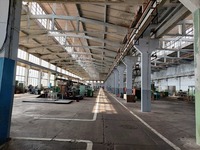 |
 Pleven Region Pleven Region
Total area 34 decares, 2 halls (total area 8510 sq.m) and admin. building (3 floors, GFA 2217 sq.m), operating business, good location, cranes for loading and unloading (lifting capacity 2x1 t, 3, 5, and 12 t), electrical connection - 110/20 kV with two underground 20 kV power lines, substation
|
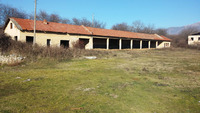 |
Kocherinovo municipality (Kustendil region)
Area: 13,657 sq.m consolidated land, with the possibility of changing the status of the parcel for another type of industrial activity.
|
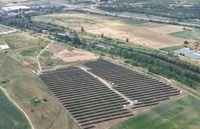 |
Blagoevgrad
111 decares of owned land (in two adjacent plots of 55 decares each) at the entrance of the city from "Struma" highway
|
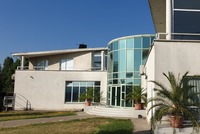 |
Sofia
Operating enterprise with excellent financial results, 14.6 decares total area with excellent location, 3 halls (total area 1600 sq.m and height 11 m), cranes for loading and unloading activities (lifting capacity 13 t), admin. building (360 sq.m), warehouses and active store
|
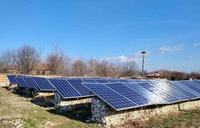 |
Municipalities: Chirpan, Bratya Daskalovi, Brezovo, Panagyurishte, and Parvomay
Total area: about 40 decares of owned land in the regions of Plovdiv and Stara Zagora, 29 installed PV plants, each with a capacity of 29,700 Wp, 3 additional properties with development potential
|
|
|
Bulgarian Industrial Association
|
| |
|
World
|
| |
|
Europe |
|
Stellantis announced that it is considering selling a low-capacity plant in Spain to its joint venture with China's Leapmotor. Such a move could temporarily save jobs, but analysts say it risks further strengthening the position of Chinese automakers in Europe. More and more European car companies are facing such a choice. The continent's market has never fully recovered from the Covid pandemic, and factories are operating at about half their capacity on average. European manufacturers are under increasing pressure from Chinese competitors who are advancing technologically quickly, producing cheaper and increasingly aggressively seeking a place in the European market. Due to the hyper-competitive domestic market in China, local car companies are increasingly looking to Europe as a key growth market. Brands such as BYD, MG, Chery, Geely, Leapmotor, Jaecoo and Xpeng were almost unknown in Europe three years ago. Today, they already hold 9% of all sales on the continent and 14% of the electric vehicle market, according to data from consultancy Dataforce. Tariffs and incentives available only to cars assembled in Europe have hampered Chinese automakers. So they are increasingly trying to circumvent these restrictions by producing locally, either with new plants or by buying existing ones. Chery kicked off this trend in 2023 when it bought a former Nissan plant in Barcelona. The company plans to produce 200,000 cars there annually. Last month, Chery also announced the opening of a research and design center in Paris that will develop a small electric car for the European market. Nissan is also considering selling its British plant in Sunderland to Chery or Dongfeng. The French-Italian-American concern Stellantis, whose portfolio includes Peugeot, Fiat and Jeep, has become the first major European car company to so openly move in this direction. The company said it was considering a partial sale of its plant in Villaverde, Madrid, to Leapmotor, in which Stellantis holds a 51% stake. In addition, Stellantis is already planning to open its Zaragoza plant to produce a Leapmotor model, and in the future it may also assemble an electric SUV under the Opel brand. According to Bloomberg, the company is even considering selling three more plants - in France, Germany and Italy - to another of its Chinese partners, Dongfeng. Ford has also confirmed that it is in talks with Geely about a partial sale of its Valencia plant. Geely already has joint projects with Renault in Brazil and South Korea. Volkswagen is also exploring similar options. CEO Oliver Blume said that the company is looking at opportunities "for our Chinese cars in Europe" and for new partnerships with its Chinese partners. Chinese companies are already leading in electric vehicles, and manufacturers like Stellantis could gradually transfer some of their electrification to their Chinese partners. This strategy may temporarily save individual companies, but in the long term it could undermine the European auto industry, the expert warns. According to him, only legislators can prevent European car companies from succumbing to this temptation. Source: BGNes
|
America |
|
In recent years, stock market watchers have found that a small group of big tech companies, dubbed the “Magnificent Seven,” have generated a huge chunk of returns. A decade ago, that group was called FANG (Facebook, Amazon, Netflix and Google — sometimes Apple). Over the past century, however, a handful of stocks driving the bulk of returns has been the rule, not the exception, according to research by Hendrik Bessembinder, a professor at the Carey School of Business at Arizona State University. From 1926 to 2025, when the weighted average return among nearly 30,000 stocks was more than 30,000%, the average stock return was -6.9%, he found. Overall, the expert concludes that over the past 100 years, just 46 companies have generated half of the wealth created by the stock market. One of the main lessons from Bessembinder’s study is that, historically, investing in the stock market has been worth the short-term risks if you hope to build wealth: Over the past century, the broader stock market has generated $91 trillion in wealth for investors, the study found. Over Bessembinder’s 100-year sample, a value-weighted portfolio of all common stocks yielded a return of $15,401 for every dollar invested. By contrast, a $1 investment in Treasury securities—government bonds that are as close to a “risk-free” investment as possible—would have netted the investor $25.34 for every dollar invested. The best performers, according to Bessembinder, are stocks that have been in the market for all or nearly all of the 100-year sample and have benefited from compound interest. They include Altria (formerly Philip Morris), industrial company Vulcan Materials, and IBM, which started out making punch cards. When you compare the returns of individual stocks to a weighted portfolio of stocks, only 27.6% of the stocks outperform the broader market, Bessembinder found. Investors in about 60% of the stocks in his sample would see their wealth decline. A more specific example is the performance of professional mutual fund managers relative to their benchmarks. Last year, 79% of large-company fund managers failed to match the returns of the S&P 500 index, according to S&P Dow Jones Indices. That marked the 16th straight year in which more than half of the professionals underperformed the index. Source: Darik radio
|
Asia |
|
Kazakhstan is making a new attempt to position itself as a technology and AI hub in Central Asia with a project for a huge data center, the value of which could reach $3 billion. The authorities in the country have signed a memorandum with an international consortium, including Dornan Engineering Group and Ample Solutions Hong Kong (Turner Company), to build a Tier III-Tier IV data center. The project is still in its early stages, with no location selected or construction deadlines announced. According to the Kazakh Ministry of Artificial Intelligence and Digital Development, the capacity of the future facility could reach 200 MW - a scale typical of some of the largest AI and cloud centers in the world. The expected investment varies between $1.5 and $3 billion, and the project also includes its own gas-fired power plant with a capacity of up to 250 MW. The reason is that such complexes have a huge electricity consumption and require independent and stable power supply. The authorities are considering land near gas infrastructure, which they believe will reduce operating costs and facilitate energy supply. Kazakhstan is trying to use several of its competitive advantages - relatively cheap energy, a cold climate and a geographical location between Europe and Asia. Cooling is among the biggest costs in operating large data centers, and lower temperatures can significantly reduce the energy required. The project comes against the backdrop of a global boom in AI infrastructure, which has sharply increased demand for large data centers and electricity. In recent months, a number of countries in the Middle East and Asia have announced plans to attract such investments. Despite the ambitious parameters, however, the implementation of the project will depend on whether Kazakhstan manages to attract real international customers and guarantee sufficient energy capacity. Such large-scale initiatives often start with memoranda and large investment assessments, but do not always reach their full volume. The country is already developing other projects in the sector. The so-called "Data Center Valley" is being prepared in Ekibastuz, which the authorities claim can attract up to $30 billion in investments. Kazakhstan has already launched the first high-performance supercomputer cluster in Central Asia. 
|
|
Indexes of Stock Exchanges
11.05.2026 |
| Dow Jones Industrial |
| 49 691.90 |
(-23.50) |
| Nasdaq Composite |
| 26 274.10 |
(27.05) |
Commodity exchanges
11.05.2026 |
|---|
| |
Commodity |
Price |
|
| Light crude ($US/bbl.) | 95.79 |
| Heating oil ($US/gal.) | 3.9226 |
| Natural gas ($US/mmbtu) | 3.0704 |
| Unleaded gas ($US/gal.) | 3.5446 |
| Gold ($US/Troy Oz.) | 4 721.45 |
| Silver ($US/Troy Oz.) | 86.16 |
| Platinum ($US/Troy Oz.) | 2 097.80 |
| Hogs (cents/lb.) | 103.25 |
| Live cattle (cents/lb.) | 24 823.60 |
|
|
|
The Bishop’s Basilica of Philippopolis |
|

The Bishop’s Basilica of Philippopolis, the predecessor of today’s Plovdiv, is the largest Early Christian temple in this country. A coin dating back to the times of Emperor Licinius (308-324) discovered during the excavations of the Bishop’s Basilica, has spawned the hypothesis that the basilica was among the first to be erected in the Roman Empire after Christianity was legalized, in 313. Its dimensions, its decoration and its central location near the ancient city’s forum indicate the existence of a sizable and influential Christian community in Philippopolis. The basilica was 36 meters wide and over 90 meters long. Its architecture was remarkable. It included a central and two side naves, an apse, a narthex (anteroom), and a colonnaded atrium (inner court). A marble-decorated presbyterium (a platform for the bishop and the clergy) rose in the central nave. Its interior was adorned by columns with Christian symbols on their capitals, by murals and lavish mosaic floors. The mosaics are the best-preserved elements of the building. They were executed in three stages, form two layers and have a total area of 2,000 square meters. The church was at the heart of the city’s Christian life in the 4th- 6th centuries until it was demolished and abandoned, probably as a result of an earthquake. However, the story of its location is a lot more complex and spans at least 12 centuries. The basilica was erected over the ruins of an ancient building probably dating back to the 1st century AD. After it was abandoned in the 10th-12th centuries, its location was taken up by a large Christian necropolis which had a cemetery church decorated with fine murals. The Bishop’s Basilica of ancient Philippopolis has a central location in modern Plovdiv as well. It is near the central square and the St. Ludwig Catholic Cathedral, providing an everlasting example for the continuity of spiritual ideas that the various generations have handed down through the centuries.
Location
|
Archive
Business Industry Capital |
|


 Български



