Business Industry Capital
|



|
Bulgaria
|
|  | |
|
BNB Exchange Rates
(24.03.2026) |
|---|
| |
GBP |
|
1.15710 |
|
| USD |
|
0.86240 |
| CHF |
|
1.09600 |
| EUR/USD |
|
1.1596* |
|
ECB exchange rate |
|
Basic Interest Rate |
| |
as of 01.12 |
|
1.81% |
|
|
|
|
Financial news |
|
Labor costs in Bulgaria continued to grow rapidly at the end of last year, according to preliminary data from the National Statistical Institute (NSI) for the fourth quarter. In October-December 2025, employers' total costs per hour worked by their employees increased by 13.9% on an annual basis, compared to 12.3% in the previous quarter. In industry, the increase was 11.8%, and in services - by 14.8%. The highest growth in total labor costs was registered in the economic sectors "Real estate operations" - by 22.5%, "Construction" - by 20.1%, and "Administrative and support activities" - by 17.2%. Compensation costs per hour worked increased by 13.8%, and other costs (excluding compensation) - by 14.3%. By economic sector, the change in remuneration costs compared to the same period of the previous year ranges from 23.5% for the "Real estate operations" sector to 3.6% for the "Production and distribution of electricity, heat and gaseous fuels" sector. Source: investor.bg
After an exceptionally strong 2025, the first two months of 2026 are expected to show a change in the dynamics of the property market in Bulgaria. According to an analysis by the Foros company, the data indicate a noticeable drop of about 17.4% in the number of registered deeds at the national level. The comparison of registered transactions between the period January-February 2025 and the same months of 2026 shows a clear cooling in almost all large and medium-sized markets in our country: Sofia: -13.2%, Varna: -21.6%, Burgas: -22.0%, Ruse: -21.1%, Veliko Tarnovo: -19.9%, Stara Zagora: -11.1%, Pleven: -30.8% and Nessebar: -32.6%. Against the backdrop of the general decline, only the Razlog region (also encompassing Bansko, Dobrinishte and neighboring settlements) shows growth among the more significant markets, reporting an increase of 10.2%. For its part, Plovdiv maintains its previous levels and registers a growth of 10% especially in apartment transactions. The data clearly shows that the market is moving from a prominent seller's market (typical for 2024–2025) to a more balanced and competitive market in 2026. Source: Darik radio
|
Companies |
|
The total value of investment transactions in Bulgaria in 2025 exceeds 389 million euros, with 60 percent of the volume being realized in the second half of the year, according to the latest data from the company for professional services and investment management in the field of real estate "Colliers". The largest investment share is office space - 63 percent, followed by retail space - 20 percent, industrial and logistics space - 13 percent and hotels - 4 percent. Local investors continue to increase their participation in the market, as in the past 2025 they were behind 78 percent of the investment volume of transactions, and foreign ones - behind 22 percent. Of all transactions, 56 percent are with income-generating properties, while 30 percent are with assets for own use and 14 percent are speculative. The return on office space decreased slightly to 7.50 percent, while commercial and industrial space remained unchanged at 7.75 percent and 7.50 percent, respectively. Bulgaria reported an increase in investment volume, which exceeded the results of the previous record year of 2024. Commercial banks maintain relatively low interest rates on mortgage loans and continue to finance new projects, with a clear preference for sustainable investments that meet European environmental goals. The office segment remains the most preferred on the investment market, supported by stable demand for quality offices in good locations and purchases for own use, as well as their conversion for residential use. Source: economy.bg
The US Department of Commerce announced in a preliminary proceeding that imports of steel rebar from Bulgaria are being made at prices below fair value under the Tariff Act of 1930, it became known from a notice published in the Federal Register. The investigation covers the period from April 1, 2024 to March 31, 2025 and was conducted within the framework of an anti-dumping control procedure. A dumping margin of 52.80 percent was preliminarily calculated for the Bulgarian producer "Promet Steel" AD, which is the only individually examined company, with the same percentage applied to all other exporters from Bulgaria. As a result, the US customs authorities will introduce provisional measures, including suspending the final customs clearance of the relevant imports and requiring cash deposits in an amount equal to the established dumping margin. These deposits function as a guarantee and in practice have an effect similar to a duty until the investigation is concluded. Upon payment, the goods can be sold on the market. The measure covers steel rebar, including bars and coils, regardless of their characteristics, excluding smooth round bars. The producer requested a postponement of the final decision, which was granted by the US authorities, with the final decision expected within 135 days of the publication of the preliminary results. In order to impose definitive anti-dumping duties, in addition to a confirmation of dumping by the US Department of Commerce, a decision by the US International Trade Commission is required, which must determine whether these imports are causing material injury or threat of injury to the US industry. If this is confirmed, the provisional deposits can be converted into definitive duties. Source: BTA
Liebherr-Transportation Systems Maritza - one of the largest German industrial investors in Bulgaria, is investing 90 million euros in a new production and warehouse facility for aerospace and other components and systems for customers, including aviation giants Airbus and Embraer. The megaproject will create over 600 new jobs after its full commissioning. The new plant uses the buildings that Pierre & Maxcom built a few years ago. The project was large-scale, with plans to produce 300,000 electric bicycles per year. However, the factory never came into operation. In April last year, Liebherr bought it for 35 million euros. The site is 200 acres, which includes a huge production hall with an area of 42,000 sq m. It is currently being re-equipped and expanded to accommodate two companies in the group - Liebherr-Transportation Systems Maritsa and Liebherr-Concrete Technology Maritsa. The new building will produce components for the aviation of the Liebherr Aerospace division - landing gear parts, air conditioning systems and flight control systems, etc. The start of the first production line is planned for May 2026, and full production capacity is expected to be reached by mid-2027. The new location will also be used for the production of heating, ventilation and cooling systems for rail transport, as well as cooling units for refrigerated semi-trailers, as well as concrete mixer trucks and concrete plants. They will be exported to Europe and the Middle East. The base will also have a 4MW solar installation and energy efficiency solutions. For this, Liebherr is looking for hundreds of assemblers, mechanics, electricians, hydraulic engineers, welders, CNC programmers, industrial engineers, designers, quality specialists, administrative staff, etc. The group's companies in our country have a total of almost 2,200 employees as of January 2026. The companies' revenues for 2024 are over 626 million leva. The largest motor racing and motorcycling track in the Balkans – A1 Motor Park near Samokov – was officially put into operation, with “Glavbolgarstroy” – investor and contractor, and “Asarel-Medet” as a partner. The construction of the facility was completed in less than a year on a terrain of 350 acres and meets the standards of the International Automobile Federation (FIA) and the International Motorcycling Federation (FIM). At the beginning of the year, the track was inspected by both organizations and received a high rating. It has been confirmed that it can be used for testing Formula 1 cars. In addition, the track has the capacity to host Formula 3 races and rounds of the World Superbike Championship. A1 Motor Park has the potential to host major international competitions and develop Bulgarian talents. A1 Motor Park will not only operate as a racing track. This is a place where both amateurs and professionals can ride in a safe environment. The calendar already includes the so-called track days – days when everyone can go out on the track with their own car. Training, academies for young drivers, corporate events and tests of automobile companies are also planned. There is also a series of open days – from March 25 to April 2. A1 Motor Park is designed as a complete complex, not just a track. The capacity is up to 30,000 spectators, with main stands on the start-finish straight and spectator areas around key turns. There are VIP areas, a paddock, modern pits, a control tower, a medical center, a restaurant, simulators and even a helipad. The technical parameters of the project include: 8,400 sq. m of concrete pavement laid, over 2 km of curbs, 4 km of drainage and over 6 km of power supply network. There are over 70,000 sq. m of green areas around the track. The asphalt is racing, according to a special recipe with the participation of Italian experts. Source: 24 chasa
The flag of the newly built 32,000-ton vessel "Hemus" (YZJ2024-1631) was raised at the Chinese shipyard Jiangsu New Yangzi Shipbuilding Co. The ship is the thirteenth bulk carrier out of a total of 15 ordered by "Parakhodstvo Bulgarian Morsi Flot" AD ("Parakhodstvo BMF") from the "Kom" series. In 2026, the construction of two more 32,000-ton bulk carriers, which will bear the names "Sredna Gora" and "Stara Planina", should be completed. The first two of this flotilla were accepted in 2021 and during their operation, they, as well as the next ones in the series, proved their profitability and competitiveness in this shipping sector. The newly built "Hemus" is the third in the history of "Parakhodstvo BMF" with this name. Source: economic.bg
At its meeting of 19.03.2026, the FSC decided: 1. Approves a prospectus for admission to trading on a regulated market of a bond issue issued by Euro Invest Management AD, Sofia. The issue is in the amount of EUR 25,000,000, distributed in 25,000 ordinary, dematerialized, registered, interest-bearing, freely transferable, unsecured, non-convertible bonds, with a nominal value of one bond in the amount of EUR 1,000, with a floating interest rate in the amount formed by 6-month EURIBOR with a surcharge of 3.00%, but in total not more than 8.00% per annum, payable in 6-month periods, with an issue date of 23.10.2025 and a maturity date of 23.10.2032, with ISIN code BG2100035257. Enters the specified bond issue in the register of public companies and other issuers of securities, for the purpose of trading on a regulated market. 3. Refuses to consider the merits of the application submitted by "Q500 Europe" EOOD requesting the issuance of a license to operate as a crypto-asset service provider due to incompleteness of the submitted documents and information. Source: Company information
The largest metal packaging production company in our country - Bulmetal AD will receive 6 million 253 thousand euros free of charge from the Just Transition Fund and will co-finance its project with 5 million 153 thousand euros. The funds will be used for production investments and achieving even greater energy independence, announced Kolyo Atanasov, who holds 88% of the company's shares. The project mainly includes automation of some of the processes in the field of small-scale production, then expansion of capacity in the field of deep-drawn cans production and development of new production facilities for them. These packages are used mainly in the canning industry, in the chemical and food industries. With the help of the Just Transition Fund project, we will become 100% energy independent. Bulmetal is developing in 3 main directions - automation of manual processes and small-scale production, new production in the field of metal packaging for the canning industry and energy independence. The company is increasing its production capabilities by building two new bases. One hall, which is being built on an area of 10 decares, has already been completed. The machines are currently being installed in it. The second hall, which is being built on an area of 2.6 decares, is due to be completed within a month. After the opening of the two new bases, the company will transfer the production, which is currently in Stara Zagora, to Gurkovo. In Gurkovo, Bulmetal has 3 production bases - northern, central and southern. The new production facilities are in the company's southern base. With the new bases, the production area in the company's southern base will become 32 decares. The investment in the construction of the two Bulmetal bases amounts to over 3 million euros. 360 people work at Bulmetal. With the latest investments, Bulmetal will achieve a capacity of its hydroelectric power plant of nearly 5 megawatts. The company's battery capacity will also increase. It was one of the first in the country to build its own battery for storing electricity. divident.eu Trading in the debt securities issue issued by Sila Holding AD – Sofia on the Bonds Segment of the BSE Main Market begins. The final date for concluding transactions with these securities is September 1, 2034. The issue with ISIN code BG2100030258 is in the amount of EUR 3,323,397.23, distributed in 6,500 ordinary, registered, dematerialized, interest-bearing, freely transferable, non-convertible and secured bonds, each with a nominal value of EUR 511.29188. This issue is the third in a row for Sila Holding. It was issued on September 11, 2025, and the maturity date is September 11, 2034. The issue has a term of 108 months, counting from the date of issue of the issue. The annual interest rate is equal to 6-month EURIBOR + 1%, but in total not less than 2.75% and not more than 5% per annum. The loan is repaid through amortization. The principal will be repaid in ten equal installments, with a fixed date for the amortization payments. The interest payment is every six months, with a fixed date for the interest payments. The trustee of the bondholders is "ABV Investments" EOOD. The issuer has the right to repay part or all of the principal of the bond loan early after one month's notice given by the issuer to the bondholders, under the conditions specified in the prospectus approved by the Financial Supervision Commission. Source: Banker
|
|
Investments
|
| |
|
|
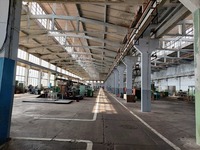 |
 Pleven Region Pleven Region
Total area 34 decares, 2 halls (total area 8510 sq.m) and admin. building (3 floors, GFA 2217 sq.m), operating business, good location, cranes for loading and unloading (lifting capacity 2x1 t, 3, 5, and 12 t), electrical connection - 110/20 kV with two underground 20 kV power lines, substation
|
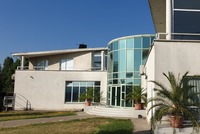 |
Sofia
Operating enterprise with excellent financial results, 14.6 decares total area with excellent location, 3 halls (total area 1600 sq.m and height 11 m), cranes for loading and unloading activities (lifting capacity 13 t), admin. building (360 sq.m), warehouses and active store
|
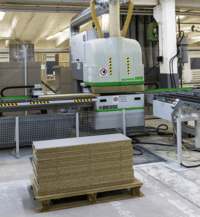 |
Sofia Region
- Active production facility
- 3100 sq. m of production, warehouse, and administrative space
- Separate showroom
- Suitable for furniture manufacturing or other light industry
- Excellent accessibility and infrastructure
- Quick commissioning / immediate production
- Potential for optimization and expansion
|
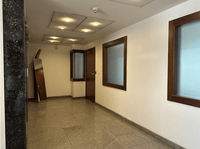 |
Sofia Center
500 sq.m, functionally distributed between open space area, private offices, meeting room, server room, and restroom
|
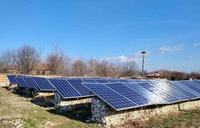 |
Municipalities: Chirpan, Bratya Daskalovi, Brezovo, Panagyurishte, and Parvomay
Total area: about 40 decares of owned land in the regions of Plovdiv and Stara Zagora, 29 installed PV plants, each with a capacity of 29,700 Wp, 3 additional properties with development potential
|
|
|
Bulgarian Industrial Association
|
| |
|
World
|
| |
|
Europe |
|
Fuel taxes in the EU account for more than half of the final price of petrol on average, with significant differences between countries also determining the different degree to which consumers feel the rise in oil prices amid tensions over the war in Iran. On average for the EU, taxes (excise duty and VAT) account for around 52.1 percent of the price of petrol (Euro-super 95), ranging from 43.9 percent in Bulgaria to 57.8 percent in Slovenia. Among the four leading economies in Europe, Italy has the highest share of taxes - 55 percent of the price of petrol, followed by Germany (54.5 percent), France (53 percent) and Spain (45 percent). For diesel, the average share is lower at around 44.6 per cent, with only four countries exceeding 50 per cent - Malta (54.3 per cent), Italy (51.1 per cent), Ireland (50.6 per cent) and Slovenia (50.1 per cent). Bulgaria (39.7 per cent) is among the countries with the lowest share of taxes on diesel, along with Estonia (37.6 per cent), Spain (38 per cent), Sweden (38.5 per cent). The rankings for diesel vary between petrol and diesel. Greece ranks fourth for petrol taxes, but 20th for diesel. Finland and the Netherlands are around ten places higher in the ranking for petrol than for diesel, while Lithuania ranks 18th for petrol, but eighth for diesel. However, in absolute terms, the differences in fuel prices in the EU are also significant. Gasoline prices range from around €1.33 per liter in Bulgaria to over €2 per liter in countries such as the Netherlands, Denmark and Germany. The EU average price is €1.84 per liter. Diesel prices are slightly lower but follow a similar geographical logic, from around €1.44 per liter in Bulgaria to close to or over €2 in countries such as the Netherlands, Denmark, Germany, Finland and Italy, while the EU average price is €1.95 per liter. Bulgaria remains among the countries with the lowest final prices for both gasoline and diesel in the EU, which is mainly explained by the lower tax burden of around €0.58 per liter for gasoline and €0.57 for diesel. This places the country significantly below the EU average levels of around €0.96 per liter for gasoline and €0.87 for diesel.
|
America |
|
Argentina is facing a potential economic breakthrough after the discovery of large-scale deposits of copper, gold and silver in the Andes. Geologists describe the find as the largest mining discovery in decades, according to Earth. The Vicuña project, developed by BHP and Lundin Mining, contains more than 12 million tons of copper and about 80 million ounces of precious metals. The resources are expected to change the country's role in the global raw materials market. The discovery comes at a time when demand for copper is growing rapidly due to the development of electric vehicles and green technologies. Experts point out that without this metal, the transition to a low-carbon economy is practically impossible. This is precisely what puts Argentina in a strategic position that could make it a key supplier in the next decade. Lundin Mining defines the deposit as an exceptional opportunity with long-term potential. Analysts expect significant investments in infrastructure if mining is expanded. Mining revenues could be used to build schools, hospitals and transport links, especially in remote regions of the country. This could help Argentina move from a traditional agrarian model to a more industrialized economy. At the same time, the project raises serious environmental questions. The mountain ecosystems in the Andes are sensitive, and environmental groups are calling for strict controls on mining. They warn that the lack of regulations could lead to long-term damage. In parallel, metal markets are showing mixed trends. Tungsten has seen a sharp price increase in the past year, with the increase linked to increased demand for military purposes amid the conflict in Iran. In contrast, gold has fallen under pressure from a strong US dollar and rising energy costs. The price of aluminum has also fallen after signals from President Donald Trump's administration about possible changes in customs policy. The exclusion of certain goods from the tariff list is being discussed, creating additional uncertainty on global markets.
|
Asia |
|
Indian technology stocks have suffered an unprecedented collapse in recent weeks on concerns that artificial intelligence could upend the traditional outsourcing model that powers the country's $300 billion core industry, the BBC reports. Over the past three and a half decades, India's software industry has created millions of white-collar jobs, giving rise to a new middle class driven by ambition and spending power. The Nifty IT index of the country's 10 largest software companies is down about 20% this year, wiping out tens of billions of dollars in investor money. The sell-off began in early February after Anthropic's Agent Claude launched a new tool it said could automate key legal, compliance and data-related processes, striking at the heart of the labor-dominated industry's business model. The panic has since intensified, as more founders have warned that IT services will disappear by 2030. Some CEOs have even warned that AI could eliminate 50% of entry-level white-collar jobs. This means that the fees that Indian IT companies used to receive from clients like banks or oil companies for managing and maintaining software, debugging and handling updates will decline as the focus shifts to more valuable but less common tasks like consulting. This will have a fundamental impact on revenue growth and demand for workers, according to Jefferies, which predicts that the worst-case scenario for IT companies is 3% lower revenue growth over the next five years, followed by no growth after 2031. According to JPMorgan Chase, while AI can speed up complex tasks and write more software code, it is “simply to assume” that they can offer the same level of customization as software companies. Rather than one replacing the other, the company envisions more partnerships between "AI tools companies and IT services companies that could create several new areas of work." According to Infosys, generative AI could displace 92 million jobs, such as front-end developers and testers, but will create about 170 million new jobs for data annotators, AI engineers and AI managers. That seems to be the growing consensus among analysts. However, IT firms will not emerge unscathed from this once-in-a-lifetime technological shift. JPMorgan says the exact impact is difficult to quantify, but the ripples are being felt in many different ways across the industry. According to Indian software lobby group Nasscom, the industry has begun to embrace these changes, with 2025 marking a turning point when the tech industry decisively moves from AI experimentation to real-world deployment. But AI project revenue is only $10 billion (out of total industry revenue of $315 billion) in 2025. And overall revenue for the sector is likely to grow only a modest 6% this year, far from the double-digit jumps seen in the hyper-growth phase. Meanwhile, hiring is expected to be weaker, with net headcount likely to be just 2.3% higher in 2026. Thanks to AI, the way IT companies charge their clients is also changing rapidly, from a number of hours worked to a results-oriented approach, according to Nasscom. IT firms’ revenues will initially decline, and the benefits of AI will only be visible in the medium term, according to analysts at Nuvama Institutional Equities. Moreover, beyond the technology issue, while tariff uncertainties for India have eased, visa restrictions have increased in the US, the largest market for Indian IT firms. The new visa fees are likely to increase operating costs by an estimated $100-250 million for India’s leading IT companies, or about 1% of their revenues, according to Moody’s Analytics. This only further weighs on this critically important sector, which accounts for about 80% of India’s total services exports. 
|
|
Indexes of Stock Exchanges
23.03.2026 |
| Dow Jones Industrial |
| 45 967.70 |
(-237.50) |
| Nasdaq Composite |
| 21 946.80 |
(299.15) |
Commodity exchanges
23.03.2026 |
|---|
| |
Commodity |
Price |
|
| Light crude ($US/bbl.) | 90.36 |
| Heating oil ($US/gal.) | 4.0443 |
| Natural gas ($US/mmbtu) | 2.9476 |
| Unleaded gas ($US/gal.) | 3.0802 |
| Gold ($US/Troy Oz.) | 4 333.29 |
| Silver ($US/Troy Oz.) | 66.59 |
| Platinum ($US/Troy Oz.) | 1 843.35 |
| Hogs (cents/lb.) | 101.81 |
| Live cattle (cents/lb.) | 23 442.50 |
|
|
|
The church St. Stephan in Nessebar |
|
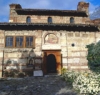
The church St. Stephan, the so-called New Bishop’s Residence, is situated in Nessebar. It was built in the 11th century from ashlars and bricks. The church is a three-hall basilica with measurements 12 x 9,50 metres. The different halls are separated by two pairs of marble columns and rectangular pillars, connected with arches. The church is very rich wall-painted. The scenes on the walls are 258 and the images – more than 1000, as more of them are thematically connected with the Holy Mary. In the beginning the church was devoted to her and later was renamed after St. Stephan. The iconostasis was made in the 16th century, from wood and was decorated with shallow carving. The bishop’s throne and the pulpit from the 18th century are also interesting with their shallow wood-carvings, representing large plant motives and gilding.
Location
|
Archive
Business Industry Capital |
|


 Български



