Business Industry Capital
|



|
Bulgaria
|
|  | |
|
BNB Exchange Rates
(08.07.2026) |
|---|
| |
GBP |
|
1.17080 |
|
| USD |
|
0.87470 |
| CHF |
|
1.08480 |
| EUR/USD |
|
1.1433* |
|
ECB exchange rate |
|
Basic Interest Rate |
| |
as of 01.12 |
|
1.81% |
|
|
|
|
Financial news |
|
Retail trade turnover in Bulgaria, at comparable prices, and production in the field of business services increased, offsetting the decline from the previous month, data from the National Statistical Institute show. In May, turnover in the section "Retail trade, except trade in motor vehicles and motorcycles" at comparable prices increased by 0.8% compared to April, when it increased by 1%. Compared to a year earlier, retail trade turnover increased by 7.9% in May after an increase of 7.4% a month earlier. On an annual basis, trade in May increased in most major sectors, including food, beverages and tobacco (by 4.7% compared to a 2.7% increase in April) and automotive fuels in specialized stores (by 13.7% compared to 8.6%). Sales growth slowed on an annual basis in non-food products excluding fuels (8.3% vs. 10.1%), in computer and communication equipment and other consumer goods (4.0% vs. 8.9%) and in mail order, telephone and internet sales (19.1% vs. 21.0%). At the same time, trade decreased at a faster pace in pharmaceutical and medical goods, cosmetics and toiletries (down 2.5% after a drop of only 0.2% in April). The NSI also presented data showing an increase in the overall production index in the field of business services on a monthly basis by 1.5% in April after a decrease of 0.4% in March. In the first six months of the year, electricity production in Bulgaria increased by almost 4% year-on-year, according to data from the Electricity System Operator (ESO). During this period, 22.2 terawatt-hours of electricity were produced, with 3 terawatt-hours coming from hydroelectric power plants (HPPs). Hydropower production doubled compared to the first half of 2025. Hydropower plants are used to balance evening demand, replacing coal. The overall share of renewable energy sources, and especially solar parks, in the country's energy mix is also increasing. In the January-June period, baseload power plants produced 10.5% less electricity year-on-year, or 14.1 terawatt-hours. Consumption, on the other hand, grew by almost 7% to 21.4 terawatt-hours. The export-import balance is positive at 866 gigawatt hours, which is a decrease compared to the same period last year, when it reached 1.3 terawatt hours. Source: investor.bg
|
Companies |
|
The loss of the state-owned Maritsa-Iztok 2 TPP at the end of 2025 increased by about 100% to 216 million leva compared to the loss of 102 million leva a year earlier. For comparison - in 2023 the plant even made a profit of 57 million leva, but the main reason for this was the inertia of 2022, when high electricity prices brought large profits even to traditionally losing electricity producers. The main reason for the company's loss is the huge costs of greenhouse gas emissions, as this is the largest expense item. They (including purchased quotas and accrued provisions for shortages) increase to 718 million leva from 656.5 million leva a year earlier. Another important factor is the decline in electricity production, as well as the decline in electricity exchange prices. By the end of last year The number of personnel at the power plant has slightly decreased and is 2,211 employees compared to 2,245 a year earlier. Despite the reduced number of employees, total personnel costs increase to 161 million leva compared to 155 million leva for 2024. However, these costs include not only salaries, but also various types of benefits - retirement, sick leave, etc. Against the background of the financial situation of the power plant, its management announced that it would start working more despite the high price of the electricity produced. "From July 1, TPP Maritsa-Iztok 2 has increased by 65% the annual quantities of electricity it provides to the regulated market. The main reason for this is the expired contract of TPP A and ES Galabovo with NEK, under which part of the energy for households was provided until April this year. With the hybrid liberalization from July 1 last year, which occurred only for the wholesale market, a new segment was created on the energy exchange - "Bilateral contracts", a mechanism "Tenders - end supplier". Thus, the estimated consumption for household end customers (which in the latest price decision of KEWR from July 1 is estimated at 13,861,833 MWh) is purchased by end suppliers entirely from the organized exchange market. On it, energy is offered under the new segment again by TPP Maritsa-Iztok 2, NPP Kozloduy and NEK's hydroelectric power plants, united in a common group and at an average price. Thus, on the one hand, the traditional increase in the annual quotas of the TPP was avoided, and on the other hand, its role and work were preserved and electricity is again guaranteed to be included in the regulated price for households. Most recently, before the creation of the new exchange segment, the TPP "Maritsa-Iztok 2" entered the mix with an annual quota between 2.2 and 2.6 million MWh, and this was done by an extraordinary order of the Minister of Energy, without which the power of the plant would have been unsellable due to its high price. The determination of a larger quota for the operation of the state-owned TPP is interesting, but equally remarkable are the 1.3 billion euros set aside, which are to be collected and redistributed by the Electricity System Security Fund (ESSF), which is filled with the 5% contributions from the revenues of electricity producers (private and state-owned), with the proceeds from the sale of national CO2 quotas, as well as with targeted imports. on the excess revenues of producers (mostly Kozloduy NPP), etc. About 460 million euros of them are earmarked for bonuses related to producers of combined heat and power (district heating), another 250 million are for compensation for electricity to businesses, and 340.5 million euros are earmarked for compensation to household customers through end suppliers, it is clear from the EWRC decision. The paradox is that the EWRC's decision of July 1 practically buys the Maritsa-Iztok 2 TPP another year of guaranteed market - a 65% larger quota and electricity, which is again included in the regulated price for households - without touching the structural problem. Given that emission quotas eat up over half of the company's revenues, more electricity sold also means more loss per megawatt-hour, if there are no subsidies through the FSES. However, the circle closes through the fund itself, whose largest revenue item is the 730 million euros from the sale of national CO2 quotas. It is with this money that the FSES subsidizes the household price, which is guaranteed to include the power plant's electricity. Thus, the question of what the relevant ministry will do with its assets and liabilities after the separation from BEH in August remains key for the future structure of this financial circle. The Competition Protection Commission (CPC) has given the green light to the Dutch company Balkan Retail N.V. to buy 100% of the shares and take full control over Galeria Burgas EAD - the company that owns and manages the mall of the same name in the seaside town. The seller is the Romanian company Mas Property Holding S.R.L., which is part of the structure of MAS P.L.C. - a public company whose shares are traded on the Johannesburg Stock Exchange. With this purchase, the buyer is seriously strengthening its positions in our country. Behind the Dutch company stands the South African property investment trust Hyprop Investments Limited. On the Bulgarian market, the group already owns and manages (through its subsidiary AP Retail I EOOD) one of the largest shopping centers in the capital - Sofia's The Mall on Tsarigradsko Shose Blvd. In the transaction documents, the buyer indicates that he sees the Gallery as a high-quality asset. Burgas is assessed as an attractive center with strong tourism and developed industry, where people's income and expenses are growing steadily. The investment will help the international group diversify its portfolio of assets in Bulgaria. The antimonopoly authority approved the acquisition unconditionally, as the two malls are located in different cities. This means that their business is not directly represented at the local level and the transaction does not pose a risk of monopolizing the market or restricting competition, the CPC decision states. Since the companies' financial results for 2025 exceed the legal thresholds for the market in our country (over BGN 25 million in total turnover and over BGN 3 million for each of the companies), the deal had to undergo prior approval from the Competition Commission. Source: economic.bg
The new management of the Road Infrastructure Agency approved a scandalous order for major repairs of roads from the time of the Zhelyazkov cabinet. It has an estimated value of 14.6 million euros and is being given to non-random companies that have offered higher price offers than their competitors, but still win. The order was announced in the distant month of February, 2025, with offers being submitted until April 14, 2025. The price offers were opened on February 20, 2026. As a result of the feverish evaluation of the order, which is divided into 2 separate positions - the Tankovo-Sunny Beach section and the Mirolyubovo-Aheloy section, it was given to companies that had offered higher price offers, but were ranked higher due to the quality assessment. “Nivel Stroy” takes the first position with a price of 7.5 million euros at the lowest bid of 6.6 million euros from “Shtrabag”, and “Groma Hold” takes a separate position 2 with a price of 6.4 million euros at the lowest bid of 5.8 million euros, again from “Shtrabag”. “Nivel Stroy” is directly related to Christoforos Amanatidis - Taki through the company “Mig Stroy 5”. “Groma Hold” is the former Agromakh. Both “Nivel Stroy” and “Groma Hold” have large advance payments under the in-house contracts of “Avtomagistrali” - “Nivel Stroy” for “Vidin-Botevgrad”, “Groma Hold” - for sections 7-9 of “Hemus”. The huge competition for these positions and the very high number of eliminated companies are impressive. For position 1, the commission eliminated 13 participants, for position 2 - also 13 eliminated. Given the great interest, complaints to the CPC can be expected. Source: Sega
Two companies - Stelit 1 EOOD registered in Sofia and Kilteks EOOD in Sevlievo - manipulated over 350 public procurements between 2020 and 2025, thus sharing the supply of food to schools, kindergartens, universities and social homes, thus harming the contracting authorities. This was announced by the member of the CPC Zhelyo Boychev after the end of the inspection in the office of one of the companies on 10 Vrabcha Street in Sofia. During the inspection, with the help of the police, numerous documents were seized from the office, which are yet to be analyzed, but preliminary checks have shown that in at least five procedures the two companies played together. In this way, they cartelized this market, and this, according to Article 15 of the CPC, can bring them a fine of up to 10% of their annual turnover. Source: 24 chasa
Izida Ceramica, the first and oldest ceramic tile manufacturer in Bulgaria, is expanding its operations with the opening of a subsidiary in Romania. The company, whose history began in 1894, has ambitious plans to develop the northern market, where it already has an established presence. In recent years, Izida Ceramica has invested 30 million euros in the modernization of its plant in Elin Pelin, near Sofia. The Bulgarian manufacturer’s products are now available in major building materials chains and DIY stores in Romania, as well as in the main distributors of construction products in the country. The plant’s annual production capacity reaches 6.5 million sq. m of ceramic tiles, with over 50% of the production being exported to regional markets such as Greece, Romania, Serbia and North Macedonia. The Bulgarian company aims to be among the top 3 most recognizable companies in the sector on the Romanian market within less than three years. Key figures for Izida Ceramica include an annual capacity of 6.5 million sq m, investments in modernization of 30 million euros and an export share of over 50%. According to data from the Romanian National Institute of Statistics (INS), the consumption of ceramic tiles in the country exceeded 300 million euros in 2025, which represents a growth of 10% compared to the previous year. About 85% of local consumption is covered by imports, and the main distribution channel is building materials and DIY stores, which occupy over 55% of the market. Source: Darik radio
Bulgarian-American Credit Bank has made changes to its Board of Directors. By decision of the Supervisory Board of BACB, Ivan Iliyanov Ivanov and Afrodita Dimitrova Milanova were elected as new members of the Board of Directors. Ivan Iliyanov Ivanov has been part of the BACB team since 2018, when he took over the leadership of the Retail Banking Department. He has over 20 years of professional experience in the field of retail banking, lending, development of banking products, sales management and optimization of business processes. Before joining BACB, Ivan Ivanov built his professional career at Allianz Bank Bulgaria, where he held a number of management positions, including Head of the Retail Banking Department and Director of the Branch Network Department. Afrodita Dimitrova Milanova has been part of the BACB team since 2026, when she took over the leadership of the Corporate Banking Department. She has over 20 years of professional experience in the banking sector, with her career focused entirely on corporate banking, credit risk management and business development with small and medium-sized enterprises. Her professional path began at DSK Bank, after which the main part of her career passed to ProCredit Bank (Bulgaria). In addition to the newly elected members Ivan Ivanov and Afrodita Milanova, the composition of the Management Board of BACB also includes: Loreta Grigorova, Executive Director, Alexander Dimitrov, Executive Director and Silvia Kirilova, Member of the Management Board. BACB is jointly represented by Loreta Grigorova and Alexander Dimitrov. The company for the supply of IoT products and solutions for smart buildings "Shelly Group" ED ended 2025 with a net profit of 42,095,585.34 euros (82,331,808.68 leva). Of this, 1,914,566.20 euros (3,744,566.01 leva) will be paid as a dividend to shareholders, the company's regular general meeting voted. An amount of 40,178,519.14 euros (78,582,353.09 leva) will remain as retained earnings. The general meeting decided to distribute as a dividend 445,981.60 euros (872,264.19 leva) of the retained earnings for 2024. Thus, the total amount to be distributed as a dividend amounts to EUR 2,360,547.80 (BGN 4,616,830.20) or EUR 0.13 (BGN 0.2543) per share. Each executive member of the board of directors will receive the annual bonus for 2026 in a gross amount of up to EUR 360,000, payable in accordance with the remuneration policy and additional conditions voted by the general meeting. The general meeting has also adopted changes to the remuneration policy for the members of the management body. A new amount of the permanent monthly remuneration of managers has also been determined. The executive members will receive EUR 30,000 instead of EUR 25,000 so far. It has been established that the conditions set out in the Scheme for granting executive members of the Board of Directors remuneration in shares, granted by a decision of the General Meeting of 13 December 2022, have been met, and the number of shares that each director is entitled to receive from the company upon exercising his rights under these options has been determined. The General Meeting decided to convert the nominal value of the shares and capital into euros, and the difference resulting from the conversion, in the amount of 23,458.06 euros, to be reflected as retained earnings. Thus, the company's capital is now 9,260,610.60 euros, distributed in 18,158,060 dematerialized ordinary registered shares, each with a nominal value of 0.51 euros. Within a period of five years, the board of directors has the right to make decisions to increase the capital of Shelly Group until reaching a total nominal amount of 12,782,297.02 euros. The general meeting voted for an increase in the capital in accordance with Art. 112, para. 4 of the Public Offering of Securities Act, in which the executive directors of the company have the right to participate. It will be carried out with 147,580 shares, each with an issue value of 0.51 euros. The deadline for carrying out this increase is until December 31, 2026. Dimitar Dimitrov and Wolfgang Kirsch have the right to participate. The investment intermediary in the procedure will be Karol AD. The offering will be successful if at least 1 share of the offered issue of shares is subscribed. A decision was also taken to increase the capital in accordance with Art. 112, para. 3 of the POSA, in which employees of the company and its subsidiaries have the right to participate. It will be carried out with 34,000 shares, with an issue value of 0.51 euros. per share. The increase must be carried out by December 31, 2026. The investment intermediary in the procedure will be "Karol" AD. The offering will be successful if at least 1 share of the offered issue of shares is subscribed. For 2024, "Shelly Group" ED paid a gross dividend in the same amount - 0.13 euros per share. Source: Banker
|
|
Investments
|
| |
|
|
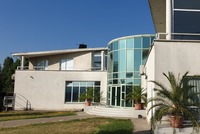 |
Operating enterprise with excellent financial results, 14.6 decares total area with excellent location, 3 halls (total area 1600 sq.m and height 11 m), cranes for loading and unloading activities (lifting capacity 13 t), admin. building (360 sq.m), warehouses and active store
|
 |
 Samokov, Sofia region Samokov, Sofia region
The property is suitable for warehouse, production, logistics, or commercial activities and offers excellent conditions for business development or investment. The facility includes storage halls, sheds, and an administrative building. Electricity, water, and sewage are provided. The property is fenced, with a spacious yard and convenient access for heavy trucks. The large plot area allows for additional construction and development of various activities.
|
 |
Burgas Region
Area: 12.9 decares
Built-up area: 1 485 m2
4 metal silos with a total capacity of 21 200 m3;
Basic equipment::
- laboratory
- weighbridge
- service building
- transformer substation
- 2 unloading areas
Potential to build 3 additional silos, an unloading area, a dryer, gas utilities, and warehouses with a capacity of up to 30 000 m3.
|
 |
Pleven Region
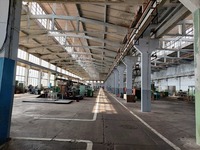
Total area 34 decares, 2 halls (total area 8510 sq.m) and admin. building (3 floors, GFA 2217 sq.m), operating business, good location, cranes for loading and unloading (lifting capacity 2x1 t, 3, 5, and 12 t), electrical connection - 110/20 kV with two underground 20 kV power lines, substation
|
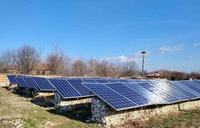 |
Municipalities: Chirpan, Bratya Daskalovi, Brezovo, Panagyurishte, and Parvomay
Total area: about 40 decares of owned land in the regions of Plovdiv and Stara Zagora, 29 installed PV plants, each with a capacity of 29,700 Wp, 3 additional properties with development potential
|
|
|
Bulgarian Industrial Association
|
| |
|
World
|
| |
|
Europe |
|
The European Commission has adopted the final version of the revised European Sustainability Reporting Standards (ESRS), which will apply to companies falling under the scope of the Corporate Sustainability Reporting Directive (CSRD). Alongside these, a new voluntary standard was also approved for companies that will no longer be required to report on their sustainability. This is one of the last key steps within the Omnibus I package, through which the European Commission aims to significantly reduce the administrative burden and requirements for ESG reporting. According to the Commission, the number of mandatory indicators has been reduced by 61%, and all voluntary disclosures have been eliminated. This brings the total reduction in required information to over 70%. In addition to the technical changes, the Commission has also made additional clarifications that should make the rules clearer and give companies more flexibility in their application. One of the most important changes is related to the reporting of greenhouse gas emissions. The new ESRS move closer to the ISSB international standards by allowing companies to choose whether to report the emissions of the companies they control through financial control or operational control. This will make it easier for organizations with complex corporate structures and partially owned companies. The standards also include a new transparency requirement for companies that publish climate transition plans but whose targets are not compatible with limiting global warming to 1.5°C. The Commission has also introduced a special clarification for asset managers. They will not be required to disclose information about investments they manage on behalf of their clients when this information is related to the client’s activities and not to the manager’s own activities. According to the European Commission, this will help avoid unnecessary duplication of information and reduce the administrative burden for investment firms. In parallel with the revised ESRS, the Commission has also adopted a new voluntary standard on sustainability reporting. Following the adoption of the Omnibus package earlier this year, around 90% of companies that were originally required to apply the CSRD are now no longer required to do so. The new criteria mainly cover companies with over 1,000 employees and an annual turnover of over €450 million. For companies that remain outside the scope of the directive, their larger counterparts will only be able to require the information included in the new voluntary standard. It is based on the Voluntary Standard for Small and Medium-sized Enterprises (VSME), which the European Commission approved last year. Although the VSME was originally intended for companies with fewer than 250 employees, the new voluntary standard has been adapted to be suitable for companies with up to 1,000 employees, with changes to the original version kept to a minimum. esgnews.bg Russia has announced an official date for the introduction of the digital ruble - September 1, 2026. The head of the Central Bank of Russia, Elvira Nabiullina, announced that all 12 systemically important banks in the country will have to carry out operations with the new currency from that day, and large retail chains will be obliged to accept it as a means of payment. The digital ruble is a state, centrally managed digital currency with a 1:1 exchange rate to the physical ruble - an encrypted digital version of existing cash. The idea was launched by Vladimir Putin back in October 2017, and later the central bank selected 13 banks to test the currency with a limited number of clients. The architecture of the new system theoretically allows tracking the entire history of transactions, which would give the authorities the opportunity to control how budget funds are spent. Civil servants will be able to voluntarily receive their salaries in digital rubles, with the central bank and the Ministry of Finance assuring that this will not be imposed forcibly. Meanwhile, demand for cash is growing due to repeated internet outages and rumors of a possible freeze on bank deposits. The feature for offline payments with digital rubles that the Central Bank planned to introduce has not yet been implemented. In its analysis, Investopedia writes that the Russian state is keeping the true goals behind the project secret, but one of the main reasons is believed to be the search for a way to circumvent international sanctions. The centralized structure - where the central bank is the sole issuer and, for now, the only institution authorized to open digital wallets - means direct state control. The Central Bank also sees potential in the use of smart contracts for businesses. To stimulate payments in the new currency, it will pay banks a commission for each digital ruble salary order - 67 kopecks per order, but no less than 10 rubles for the entire payroll paid.
|
America |
|
A country of three million people - Uruguay, has just beaten the field to a global milestone in green hydrogen. The World Bank’s private-sector arm picked it for the very first green hydrogen investment it has ever made, anywhere. Green hydrogen is fuel made by using clean electricity to split water, producing no carbon when it is made or burned. It is one of the most talked-about tools for cleaning up industries that batteries cannot easily reach, such as heavy freight and heavy industry. The catch worldwide is that almost none of it gets built. Fewer than one in twenty announced projects has reached the point where real money is committed, which is exactly what makes Uruguay’s deal notable. The structure is deliberately modest and practical. The IFC is putting in a $ 20 million green loan alongside the bank Grupo Santander, with extra support from a United Nations renewable-energy fund. The money backs a pilot called Kahírós, run by a group of Uruguayan firms. Solar panels will generate power, that power will make hydrogen, and the hydrogen will run six specially built fuel-cell trucks carrying timber to Montes del Plata, one of the country’s big pulp producers. It is the country’s first integrated green hydrogen system for freight, and it is meant to start running by the end of this year. On its own it will cut about eight hundred and seventy tonnes of carbon a year, roughly the same as taking three hundred cars off the road. The point is not the size but the signal. When a AAA-rated development lender makes its global debut in a technology here rather than in a larger market, it tells other investors the country is a credible place to try clean-energy bets. Uruguay has earned that reputation. It already runs almost entirely on renewable electricity, which gives it the clean power a hydrogen industry needs and a track record that reassures cautious lenders. The choice of freight is telling. Long-haul trucking is one of the hardest things to electrify with batteries alone, so using hydrogen to move timber is a real-world test of whether the fuel can work where cleaner options fall short. By tying the trucks to a single large pulp customer, the project has guaranteed demand from day one, which is exactly the kind of certainty that early clean-energy ventures usually lack. The ambition runs well beyond six trucks. Backers argue the wider industry could support more than 30 000 direct jobs by 2040 and turn a small farming and forestry economy into an exporter of clean fuel, though that promise still has to survive the hard test of costs and power prices. The Rio Times
|
Asia |
|
Since July 7, the European tire market has been changing - cheap imports from China have been hit with a duty of at least 30%, which could reach 52%. After more than a year of investigation, Brussels has reached the final phase of the anti-dumping procedure against imports. The investigation was launched by the EC on May 21, 2025, following a complaint from the European industry, according to which Chinese tires were sold in the EU at dumped prices. The Commission pointed out at the start that the tire market for cars and light trucks in the EU is worth over 18 billion euros per year, and the sector directly employs about 75 thousand people in 14 member states. The rates discussed are differentiated according to the manufacturer and its behavior in the investigation, reaching up to 52% for some companies, and around 30% for cooperating manufacturers. The Bulgarian market is also affected, because WITS/UN Comtrade data show that annual imports from China amount to nearly 1 million tires worth over $31 million. This means that they hold nearly a third of the market. The average import price is $35.3 per tire. This explains why the new duties can be felt mostly in the budget segment. Chinese tires are not the only cheap ones on the market, but in mass sizes they often hold the lower price limit. The most common Chinese brands and those with Chinese ownership that can be seen in our country are Sailun, Linglong, Goodride, Triangle, Austone, RoadX, Onyx, Sonix, Leao, Dynamo and other brands. However, some of them already have or use factories outside of China. Sailun, for example, indicates production bases in China, Vietnam, Indonesia and other countries, which means that the price of the same brand may have a different effect depending on the actual origin of the specific tire. The duty is not charged on the final price in the store, but on the import value. At an average of around $35.3, a 30% duty means an additional $10.6 per tire, and at 52% - around $18.3. After VAT, the effect for the end customer could be around €11 to €19, if retailers pass on the entire additional cost in the price. Thus, a tire that now sells for around €50 could end up at around €61-69. A set of four, which currently costs around €200, could end up being €45-75 more expensive if it is a new import from China. For larger sizes, where the starting price is €60-70 per piece, the price increase in absolute value will be similar, but as a percentage it will look a little lower. However, imports could quickly be redirected to factories outside China, including in Vietnam, Thailand, Indonesia, Korea, Turkey and Serbia. This shift is already being seen at a European level. Data from Tyres Europe on imports into the EU and the UK shows that traders have brought forward shipments from China in 2025 due to expected tariffs. Tyre imports rose by 5% in January-November 2025, with China remaining the dominant supplier outside Europe. At the same time, Vietnam has seen very strong growth, suggesting where some of the trade could be redirected. Source: 24 chasa 
|
|
Indexes of Stock Exchanges
07.07.2026 |
| Dow Jones Industrial |
| 52 835.50 |
(-61.50) |
| Nasdaq Composite |
| 25 818.70 |
(-302.47) |
Commodity exchanges
07.07.2026 |
|---|
| |
Commodity |
Price |
|
| Light crude ($US/bbl.) | 72.14 |
| Heating oil ($US/gal.) | 3.3440 |
| Natural gas ($US/mmbtu) | 3.2198 |
| Unleaded gas ($US/gal.) | 2.9486 |
| Gold ($US/Troy Oz.) | 4 126.51 |
| Silver ($US/Troy Oz.) | 60.35 |
| Platinum ($US/Troy Oz.) | 1 639.00 |
| Hogs (cents/lb.) | 94.28 |
| Live cattle (cents/lb.) | 23 670.40 |
|
|
|
Raisko Praskalo waterfall |
|
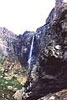
The Raisko Praskalo waterfall (“raiski” in Bulgarian language means “heavenly”, and “Praskalo” means a place, where water sprinkles), is located in the Jendema natural reserve. The name of the reserve comes from the Turkish word “jendem” which means “hell”, though it is a true paradise for its numerous inhabitants – wolves, bears, deers, wild goats, eagles, etc. The reserve covers the area between the Botev and Ravnetz summons in the Stara Planina mountain, as well as the upper stream of the Tundja river and the gorge of the Tuzha river. It is one of the hardest to access Bulgarian natural reserves. “Raiskoto Praskalo” is the highest waterfall not only on the territory of Bulgaria, but also on the whole Balkan peninsula (125 m). It can only be reached on foot. The walk to it usually takes some 4 hours starting from Panitzite near Kalofer. The waterfall springs almost from the very Botev summit.
Location
|
Archive
Business Industry Capital |
|


 Български



