Business Industry Capital
|



|
Bulgaria
|
|  | |
|
BNB Exchange Rates
(09.02.2026) |
|---|
| |
GBP |
|
1.15220 |
|
| USD |
|
0.84790 |
| CHF |
|
1.08990 |
| EUR/USD |
|
1.1794* |
|
ECB exchange rate |
|
Basic Interest Rate |
| |
as of 01.12 |
|
1.81% |
|
|
|
|
Financial news |
|
Bulgaria ranks fourth in the European Union in terms of household income for the period from 2014 to 2024. The real income of Bulgarian households has increased by 45% and in this indicator we are second only to Romania, Hungary and Croatia, where the growth is 76%, 55% and 51% respectively. Household income shows how much money they have available for spending or saving. The indicator is measured after deducting income taxes and pension contributions. It also includes the value of services, such as education and healthcare, that households receive free of charge from governments and non-profit organizations. For the period from 2014 to 2024, household incomes have increased by 17% on average for the EU, and by 14% for the euro area. The “champion of anti-growth” is Sweden, which is at the bottom of the ranking with a growth of only 5%. Here it is accompanied by Austria and Italy with 8% each. Household incomes in the major economies of Germany and France grew by 13% and 12% respectively, which is below the EU average. Source: BGNes
The average payment term for invoices in Bulgaria is usually over 30 days, with 25% of them not being paid on time. This is shown by the results of the Allianz Trade Collection Complexity Score and Rating study, which covers 52 countries around the world. This result gives Bulgaria a "high" level of complexity in debt collection - 40 points on a scale from 0 to 100. The most problematic sectors in terms of receivables are such as construction, transport, agribusiness, textiles, fuels and food, and they affect small and medium-sized companies the most. The majority of delayed payments eventually become a fact. A highly recommended first step for businesses is extrajudicial collection, because when it comes to a lawsuit, "although there are no significant deviations from practices in other EU countries, the procedures are slow, the costs are significant, and the very implementation of court decisions can be problematic." The most ineffective mechanism is the declaration of bankruptcy, because the proceedings often end without any proceeds for creditors, especially for unsecured ones, Allianz Trade points out. The data from the study show that bankruptcies at the global level continue to grow for the fifth consecutive year - with a 6% growth for 2025 and an expected 3% for this year. Bulgarian companies encounter difficulties even with the collection of receivables from partners in the Netherlands, which is among the most correct countries in the ranking. The greatest risks of default among the traditional destinations of Bulgarian exports are when working with companies from China, India, the USA and the Czech Republic. Allianz Trade emphasizes that increased attention is also needed in transactions with Italian and Turkish companies. The most problem-free collection of receivables from German companies. Absolute "champions" in incorrectness are in Saudi Arabia, Mexico and the UAE.
|
Companies |
|
The pension system in Bulgaria is based on three pillars - mandatory state pension insurance, mandatory additional pension insurance in pension funds and voluntary pension insurance in pension funds. There are 10 pension funds in Bulgaria: "DSK-Rodina", "Doverie", "Saglasie", "Allianz", UBB, "CCB-Sila", "Badeshte", "Toplina", "DallBogg" and "Pension Insurance Institute". Their total net assets as of the end of September exceed 15 billion euros. However, the average accumulated funds in the accounts remain relatively small at the moment. Everyone can also create their own, fourth, pillar - savings and personal investments, which, if managed correctly, can not only be a supplement, but also outpace the others. For the last 12 months, the universal pension funds mandatory for everyone born after 1959 have registered an average yield of over 6%. The net assets of universal pension funds (UPF) exceed EUR 13.3 billion at the end of September, compared to nearly EUR 11.9 billion at the end of December 2024. Universal funds are only part (albeit the largest) of the pension system - in addition to them, there are professional pension funds (PPF), voluntary pension funds (VPF) and voluntary pension funds under professional schemes (VPFS), with their assets the system manages EUR 15 billion. About 4.13 million people have a stake in universal pension funds, which makes them the most indicative for the sector due to their large volume. Of these, over 1 million are in the Doverie fund, and about 835 thousand - in DSK-Rodina, followed by Allianz Bulgaria with about 795 thousand people. It is the Allianz fund that has the best return for the last 12 months compared to the end of January 2026 with nearly 8%, but DSK-Rodina and Doverie also registered good returns - over 7% and slightly under 8%, respectively. The numbers are against the backdrop of returns of over 15% for the S&P 500 for the last year, over 16% for the German DAX and over 50% for Sofix. Pension funds invest only 30% in equity instruments, which limitation is related to the limits imposed by the regulator FSC. The average amount of accumulated funds of insured persons reached nearly 6.3 thousand leva as of the end of September. However, the individual amount of accumulated funds in the accounts of insured persons varies significantly and depends on many factors such as: the duration of the insurance period, contributions, income, fees, and so on. Voluntary participation funds are significantly smaller than mandatory ones, but still have shares in them over 630 thousand people. Over a third of people are in the voluntary fund of "Allianz". The profitability of voluntary funds is slightly higher than mandatory ones for the last 12 months - nearly 8%. The higher profitability is due to the fact that a higher share - over 40% of their assets - is in equity capital.Their net assets are about 840 million euros as of the end of September. As the name suggests, these funds are not mandatory, but are part of the so-called third pillar with voluntary contributions. Nearly 70% of them are personal contributions, and about 30% come from contracts with an employer. In total, the contributions for the first nine months of last year in them are over 51 million euros. Workers in the first and second categories of labor, such as miners, machinists, drivers and others, are entitled to additional pension insurance, which is covered by the employer. It is for them that the professional pension funds are intended, which should provide them with a supplement after the early retirement to which they are entitled. The profitability of these is similar to that of universal funds - about 6% in the last year. Over 330 thousand people are insured in the mandatory PPFs as of the end of September, with more than half of them in "Doverie", "DSK-Rodina" and "Allianz". The assets of the professional funds reached almost 1 billion euros as of September 30, with the average amount of accumulated funds in the accounts being about 3 thousand euros. Each company has its own investment policy - DSK-Rodina, Doverie and UBB, for example, have a more conservative approach with more shares abroad, while Saglasie, Sila, Badeshte and Toplina, for example, prefer more Bulgarian shares, which also include a high stake in companies related to their economic groups. This can be positive if invested in liquid companies on the Bulgarian Stock Exchange, as they support investments in the economy, but it can also be risky if this happens in illiquid companies, as the exit from such companies is a little more complicated. The mandatory funds of Saglasie, Toplina and Sila , have nearly 25 million euros invested in the real estate company Velgraf Asset Management - a company with about 175 million euros of capitalization on the stock exchange, where the trading volume for the first 15 days of January was only 400 shares. And this is not the only illiquid company that is present in the investment portfolios of a particular part of pension companies. If an exit from these investments is necessary, it is quite uncertain whether a buyer will be found and, most importantly, at what price. The Competition Commission has authorized Progress Holding to acquire sole control over grain and oilseed trader Trust Agro. The sole owner of Progress Holding's capital is Ukrainian with Bulgarian citizenship Oleksandr Minov. The holding company is a co-shareholder with Trust Agro, as well as with companies of the owners of Gradus in the oil producer Biser Oliva. Progress Holding does not have its own production or commercial activity and only manages subsidiaries. Minov's main business is through the company Risoil, which is engaged in trade and transport of agricultural industry, and is one of the largest on the market in our country. Its revenues for 2024 are over 413 million leva, and the profit is more than 24 million leva. However, the acquiring group also includes the grain and oilseed wholesaler Arietis. Its only supplier is Trust Agro. It has revenues of 67 million leva in 2024 and a small profit. The group of the acquired company also includes the producer of wheat, sunflower, coriander and alfalfa from Omurtag and Antonovo Agrovariant. However, it is responsible for less than 0.1% of production in our country in the 2023-2024 business year. According to the CPC study, the combined market shares of the participants in the transaction in the trade in grain and oilseed crops range between 0% and 5%, with effective competitive pressure. Biser Oliva is similarly positioned in the markets for refined and unrefined sunflower oil. Thus, the regulator's general conclusion is that the concentration will not lead to vertical anti-competitive effects. An updated estimate of ore reserves at the Chelopech deposit indicates that its exploitation can be extended until 2036, instead of the previously estimated end of its life in 2032. Thus, in the next ten years, an average of 110 thousand troy ounces of gold can be extracted annually, announced the Canadian company "DPM Metals", which mines in Bulgaria at the "Chelopech" and "Krumovgrad" mines. A reassessment and recalculation based on updated parameters and new board contents of the resources and reserves of ore in the deposit have been carried out and the current assessment based on proven and probable metal reserves in quantities is 1.6 million troy ounces of gold and 308 million pounds of copper. This is the basis for extending the exploitation life of the deposit until 2036 at an average annual productivity of 160,000 troy ounces in gold equivalent - that is, an assessment of all metals in the ore. The new data does not take into account the potential for additional reclassification of resources into reserves and for resource and reserve growth as a result of successful exploration and exploration activities, as well as the recently discovered rich ore mineralization in the deep part of the "Wedge Zone" section in the "Chelopech" concession area near the current resource and reserve contour of the deposit, the company notes. The "Chelopech-North" deposit and the "Brevene" subsurface exploration area are also not included. The discovery of new mineralization with economic contents in the "Wedge Zone" section, located on the northern flank of the "Chelopech" concession area, approximately 300 m from the existing mining infrastructure, opens up broad prospects for other discoveries in these levels of the hydrothermal system, previously considered unproductive. In the "Wedge Zone", the company has planned a new 10,000 linear meters of drilling, which is expected to be completed in the first quarter of 2026. The results of this will be announced in the second quarter of the year. DPM is also working on the procedures for obtaining a concession for the production of the "Chelopech-North" deposit and the assessment of reserves in the "Brevene" area. The company expects to take the concession for "Chelopech-North" this year. "Brevene" is in the process of assessing reserves, so that a commercial discovery can be declared and a request for a concession for production can be made. This area covers about 27.3 sq. km and has several promising exploration areas, the company notes. Source: mediapool.bg
Villeroy & Boch's presence in Bulgaria puts the country on the map of one of the oldest operating industrial groups in Europe. Through the deal worth around €600 million, the world-famous German manufacturer practically set foot in Sevlievo 2 years ago. Founded in 1748, today Villeroy &; Boch operates in around 140 markets, has approximately 12,000 employees and manages production in Europe, Asia, the Middle East and North Africa. After the acquisition of Ideal Standard in 2024, the group significantly increased its scale and strengthened its positions in the segment of sanitary ware and bathroom equipment - a key business for Bulgarian production as well. The company began as a family business in Lorraine, where François Boch and his three sons opened a pottery workshop in Audun-le-Tiche, in the Lorraine region. By the end of the 18th century, the family business was already developing successfully on a regional level, with Luxembourg becoming one of its first key markets. In parallel, in what is now Germany, the entrepreneur Nicolas Villeroy was developing his own ceramics production. The meeting between the two families in 1836 became a cornerstone. And the subsequent merger turned out to be a strategic move that turned Villeroy & Boch into one of the early industrial champions of Europe. The combination of production capacity, design and entrepreneurial spirit allowed the company to compete even with the dominant English ceramics industry at the time. In the second half of the 19th century, Villeroy & Boch began to develop products for the home and construction industry in significant volumes. The mass production of bathtubs and toilets at the end of the century became the basis of a business that over time overtook traditional tableware in economic importance. This focus on sanitary ware gradually shaped the company as a supplier for residential and public construction - a segment that remains strategic to this day. The two world wars interrupted normal trade and production, but Villeroy & Boch managed to recover and retain key production bases. After the 1960s, the company accelerated its exports outside Europe, including to Japan and the USA. Restructuring in 1982 and going public in 1990 transformed the group into a more flexible corporate structure, able to finance growth through the capital markets. After 2000, Villeroy & Boch built an international network of factories that combined technology centers in Europe with production in regions with a better cost structure. Today, the group maintains facilities in Germany, Egypt, Thailand and Bulgaria - a model that allows for faster deliveries and better service to regional markets. The plant in Sevlievo fits precisely into this logic - as part of the European production base, serving both the EU and neighboring markets. The acquisition of Ideal Standard practically changes the scale of the group. The deal expands the portfolio, strengthens its position in the project business and increases its presence in Central and Eastern Europe. The financial results already reflect the effect of the integration. In the first quarter of 2025, Villeroy & Boch's revenue increased by 33.2% to €369.1 million, and operating profit increased despite ongoing investments in modernization. In the first quarter of 2025, the group invested €6.5 million in the renovation of production facilities, including in Bulgaria. "BDZ Passenger Transport" is urgently purchasing up to 98 second-hand wagons from "Deutsche Bahn" for 23.52 million euros excluding VAT, according to a public procurement notice. The reason is a shortage of wagons for the trains, which puts the implementation of the contract with the state for public rail passenger transport at risk. The new second-hand wagons are priced from 210,000 to 250,000 euros and are slightly more expensive than the 76 wagons purchased in March 2024. At that time, BDZ Passenger Transport purchased 76 wagons from Deutsche Bahn for 30.5 million leva (15.6 million euros). The price of one wagon was 200,000 euros. Currently, only the German railway carrier - DB Regio AG, has announced a public tender for the sale of a total of 138 used first-class and second-class wagons for 1435 mm gauge, used in the railway system of the European Union. For this reason, the public procurement has been announced under a negotiated procedure without a prior invitation to participate, and the deal is expected to be completed within ten days. The order was announced on February 5, and the deadline for submitting bids is February 16 inclusive. "BDZ Passenger Transport" complains about a shortage of wagons, which is why some of the routes are canceled. The company has a contract with the state to provide public rail passenger transport, for which it receives a subsidy of 110 million euros. According to its plan for 2026, "BDZ Passenger Transport" must have at least 542 passenger wagons. Of these, 40 - first-class, 360 - second-class, 30 mixed - first and second class, 52 - sleeping and couchette wagons and 60 - other wagons, such as for transporting people with limited mobility, restaurants, buffets, vans. Some of the fast trains that currently serve the long routes from Sofia to Burgas, Varna and Ruse are composed of the wagons purchased from "Deutsche Bahn" in 2024 and partially offer the necessary comfort. The remaining fast trains are served by the old fleet of passenger wagons, which do not offer necessary comfort. Currently, "BDZ Passenger Transport" has a shortage of 26 second-class carriages to fulfill the contract with the state. At the end of April, the revisions of another 54 passenger carriages (18 - for capital repairs and 36 - for medium repairs) expire. Thus, the total shortage will be 80 carriages. It can be overcome by delivering up to 98 passenger carriages (the number is higher to have a reserve). From the end of 2026, the new 12-year contract with the state for servicing the western direction came into force, which includes 18 express trains, for whose trains about 50 carriages with a higher level of comfort are needed - air conditioning, ergonomic seats, automatic closing and locking of the side doors, closed toilets, information system. At the moment, the state company does not have carriages of a similar type to ensure the service of the express trains. However, it is expected that the first ones will arrive by then new Škoda trains, which were bought with money under the Recovery and Sustainability Plan. Although it will only serve the so-called western direction, the state-owned company's train kilometers under the new contract increase from 20 million now to 23.55 million strongtrain kilometers. To meet this requirement, new rolling stock will be needed. Source: mediapool.bg
Svishtov Municipality announced that it has managed to defend the need for significant investments in improving the water supply network infrastructure, as a result of which the Yovkovtsi Water Supply and Sewerage Company will carry out a number of repair activities on its territory for over 19.5 million euros. The money for the project will be under the EU-funded Environment Program 2021-2027, priority "Water". A water supply line is to be built, providing power to the municipal center, which will cost over 15.3 million euros. It, with the adjacent network, will be about 14.6 km. The relevant facilities will be built to it, as well as 3 pumping stations (Stara, Bolnitsa and Mladost) will be reconstructed, and the two dry chambers of 1 pressure tank (Mladost - low zone) will be repaired. A contractor has yet to be selected for these repairs. On February 2, 2026, the Yovkovtsi Water and Sewerage Company announced a public procurement for the implementation of the project "Reconstruction and expansion of the internal sewage network of Svishtov and the accompanying water pipes". The estimated value of the investment is 4,567,148 euros excluding VAT, and as provided for in the conceptual design, the activities cover the reconstruction and new construction of water and sewage networks in Svishtov. This includes the implementation of about 2.2 km of water supply network, including the relevant facilities along it, as well as about 8 km of sewage network and facilities to it, including 3 pumping stations. Source: Banker
|
|
Investments
|
| |
|
|
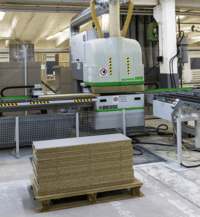 |
 Sofia Region Sofia Region
- Active production facility
- 3100 sq. m of production, warehouse, and administrative space
- Separate showroom
- Suitable for furniture manufacturing or other light industry
- Excellent accessibility and infrastructure
- Quick commissioning / immediate production
- Potential for optimization and expansion
|
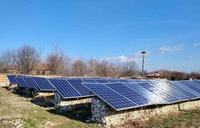 |
Municipalities: Chirpan, Bratya Daskalovi, Brezovo, Panagyurishte, and Parvomay
Total area: about 40 decares of owned land in the regions of Plovdiv and Stara Zagora, 29 installed PV plants, each with a capacity of 29,700 Wp, 3 additional properties with development potential
|
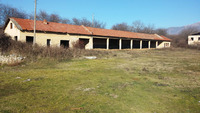 |
Kocherinovo municipality (Kustendil region)
Area: 13,657 sq.m consolidated land, with the possibility of changing the status of the parcel for another type of industrial activity.
|
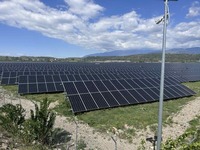 |
Blagoevgrad
111 decares of owned land (in two adjacent plots of 55 decares each) at the entrance of the city from "Struma" highway
|
|
|
Bulgarian Industrial Association
|
| |
|
World
|
| |
|
Europe |
|
International Monetary Fund Managing Director Kristalina Georgieva called for urgent and decisive action to "reenergize Europe", warning that the EU's economic convergence is slowing and the continent's competitiveness is weakening. The European Union remains rich, creative and fair, but its relative economic weight is declining. In 2010, she said, the EU's GDP was comparable to that of the US and significantly larger than China's, while today the gap has reversed. This is gradually undermining the EU's ability to maintain its social model. The second serious weakness is productivity. Europe lags behind in both technological and non-tech sectors, and the gap with the US continues to widen. The third problem concerns the scale and competitiveness of European companies. Companies created in the last 50 years have significantly lower market capitalizations compared to their American competitors, especially in the field of high technology. This hinders their growth and often pushes innovators to seek development outside Europe. The IMF estimates that a potential collapse in trade with the US would cost the EU about 0.3% of GDP this year and next, on top of the 0.5 percentage points already lost. The solution, according to Georgieva, lies in significantly faster productivity growth. To achieve this, she says, two parallel processes are needed: structural reforms at the national level and completing the single market through the effective implementation of the four freedoms - movement of goods, services, people and capital. Source: Duma
|
America |
|
World cereal production is on track to reach a record high of 3.023 billion tonnes in 2025, according to the latest estimates from the Food and Agriculture Organization of the United Nations (FAO). The updated forecast projects record yields for wheat, rice and feed grains. The main drivers of this optimism are better-than-expected results in the European Union, Canada and Argentina, as well as expanded maize areas in China and the United States. The positive trend is expected to carry over into 2026, despite dynamic conditions in different regions. While India is expected to have record winter wheat areas, boosted by high domestic prices, the United States is seeing a contraction in crops due to market conditions and droughts. In the southern hemisphere, the outlook for Brazil and South Africa remains favorable, providing a solid basis for supply in the second quarter of next year. One of the most important economic signals in the report is the expected increase in world grain stocks by 7.8 percent. This will lead to record high levels of inventory, with the ratio of stocks to consumption reaching 31.8 percent - the highest value recorded since 2001. This buffer is a key factor in suppressing price volatility and ensuring global food security. Although cereal consumption will also grow by 2.2 percent, production rates are outpacing demand, creating the conditions for a more predictable market. World trade in the sector is expected to strengthen by 3.6 percent in the 2025/26 marketing year, supported by abundant supply and activity by major exporters.
|
Asia |
|
China's central bank increased its gold reserves for the 15th consecutive month in January, data from the People's Bank of China (PBOC) showed, Reuters reported. The country's gold reserves rose to 74.19 million troy ounces of fine gold at the end of January, from 74.15 million troy ounces a month earlier. The value of gold reserves rose to $369.58 billion at the end of last month from $319.45 billion at the end of December, the PBOC data showed. Gold, traditionally seen as a safe haven against political and economic risks, saw a sharp speculative rally in January, when its price hit a record high of nearly $5,600 an ounce. China's gold consumption fell for the second straight year in 2025, falling 3.75 percent to 950 metric tons, the state-backed China Gold Association said. Meanwhile, purchases of gold bars and coins, reflecting demand for safe-haven assets, rose for the second year in a row, up 35.14 percent in 2025, now accounting for more than half of the country's total gold consumption. The People's Bank of China ended an 18-month gold buying spree in May 2024, but resumed purchases six months later. Source: BTA 
|
|
Indexes of Stock Exchanges
06.02.2026 |
| Dow Jones Industrial |
| 50 118.00 |
(1 335.50) |
| Nasdaq Composite |
| 23 031.20 |
(490.63) |
Commodity exchanges
06.02.2026 |
|---|
| |
Commodity |
Price |
|
| Light crude ($US/bbl.) | 63.17 |
| Heating oil ($US/gal.) | 2.3867 |
| Natural gas ($US/mmbtu) | 3.2938 |
| Unleaded gas ($US/gal.) | 2.0196 |
| Gold ($US/Troy Oz.) | 4 967.27 |
| Silver ($US/Troy Oz.) | 77.94 |
| Platinum ($US/Troy Oz.) | 2 099.58 |
| Hogs (cents/lb.) | 99.15 |
| Live cattle (cents/lb.) | 23 772.40 |
|
|
|
1949 Bulgaria becomes a member of UNICEF |
|

United Nations Children's Fund (UNICEF) was founded on 11 December 1946 by the United Nations' General Assembly to provide emergency relief, food and health care to children injured in the Second World War. In 1953, UNICEF became an integral part of the United Nations system and its name was abbreviated by the United Nations International Children's Emergency Fund (UNICEF). Following the change of name, UNICEF's adopted acronym (UNICEF) continues to be used. UNICEF's headquarters are in New York (USA). UNICEF is funded exclusively by voluntary contributions.UNICEF is the strongest advocate for children in the world and a leading organization working in over 190 countries. On 9 February 1949, Bulgaria became a member of UNICEF. The organization works to prevent the separation of children from their families, to prevent violence and abuse of children, to support the social inclusion of children and families. Dimitar Berbatov is the first Goodwill Ambassador of UNICEF Bulgaria. (Source: bg.wikipedia.org)
|
Archive
Business Industry Capital |
|


 Български



